

Baccarat Collectibles : 1816 Price List
average value
-
low
-high
-Found 20 out of 35,154 items matching '1816'
Sold on eBay October 10th, 2024
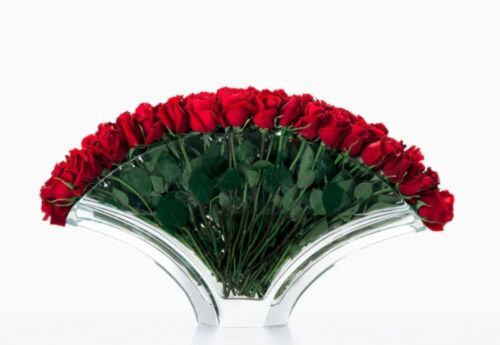
Beautiful SIGNED Baccarat Crystal GINKO XL VASE
Luxury at its finest, high-end crystal vase made and signed by Baccarat. The form of the Baccarat Clear crystal Ginkgo Extra vase is a perfect homage to its namesake, the ginkgo biloba leaf. This heavy crystal vase immaculate silhouette fans out into a resplendent translucent arc. It is cut in a continuous, uninterrupted span of baccarat crystal, clear crystal: a striking piece, amplified all the more by its considerable size. The ginkgo crystal vase is capable of rendering any floral arrangement into a true botanical showcase, allowing the stems to spread amply and the buds to flourish freely. It is also an immaculate piece unto itself thanks to its a skillful showcase of craftsmanship. Dimensions: 1. Vase middel H 11,8" (30 cm); D 5,1" (13 cm) Width 22,4" (57 cm) Weight 20.6 Kilograms. In very good condition. Complete the set with our smaller version (see video and last foto's). Feel free to ask for additional information. Baccarat In 1764, in eastern France, a group of daring craftsmen set out to transform the four elements of nature – earth, air, fire and water – into glass of absolute quality. In 1816, they perfected their well-kept secret formula to obtain a crystal of unparalleled purity. In 1855, for the first World Fair in Paris, Baccarat unveiled its unique original, soulful craftsmanship to the world. In excellent condition. Price is a give away (Condition: Pre-Owned)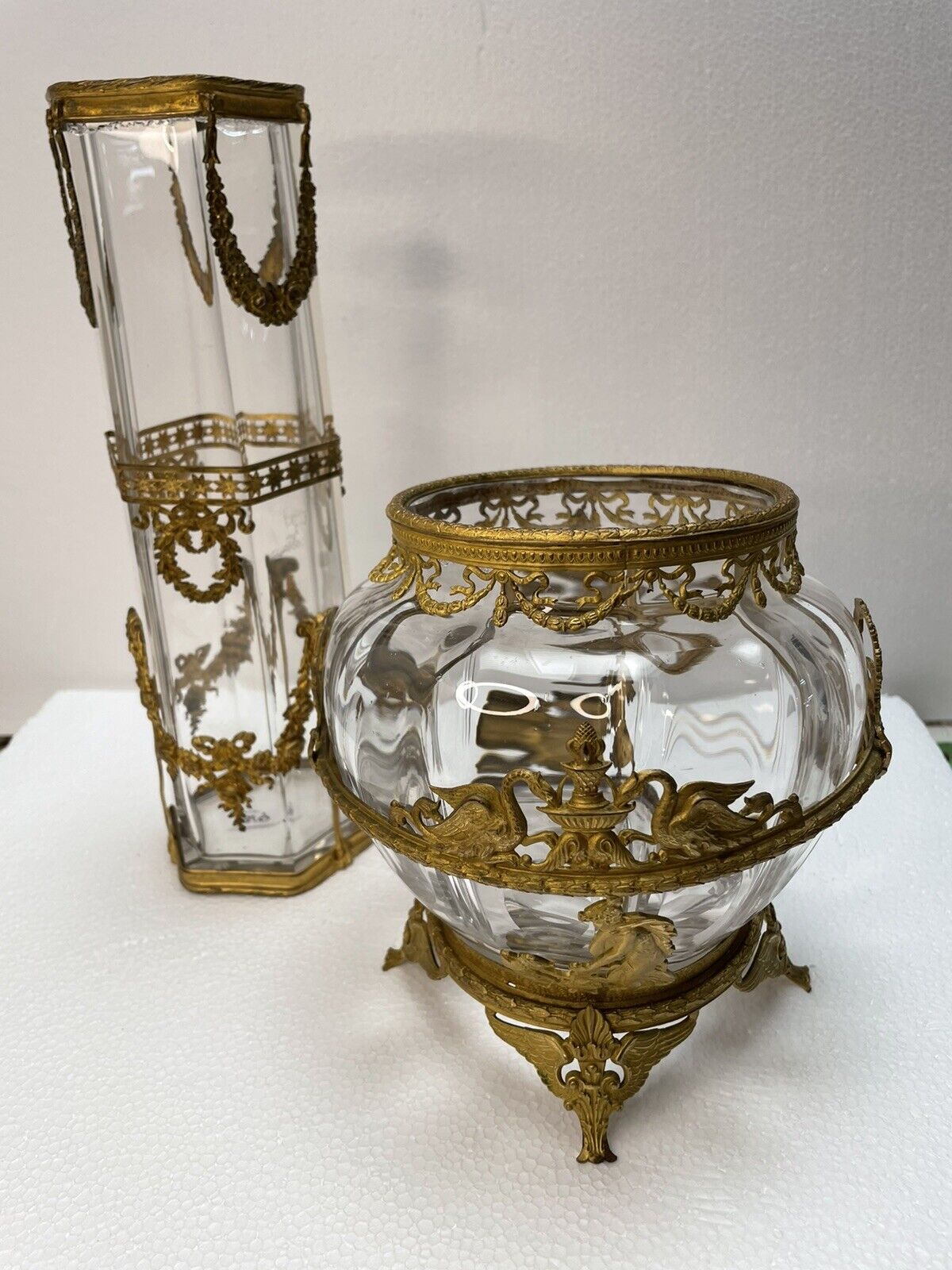
Sold on eBay November 13th, 2024
TWO MAGNIFICENT BACCARAT CRYSTAL AND DORE BRONZE VASES #319
TWO MAGNIFICENT BACCARAT CRYSTAL AND DORE BRONZE VASES BACCARAT WAS KNOWN BEFORE AND AROUND THE TURN OF THE CENTURY FOR THEIR AMAZING CRYSTAL AND DORE BRONZE PIECES. HERE ARE TWO BEING SOLD TOGETHER WITH BEAUTIFUL AND INTRIQUE BRONZE WORK. #1 TALL VASE BACCARAT CRYSTAL IS CLEAN BRONZE WORK GREAT. FROM THE TOP YOU HAVE A DORE BRONZE BAND THAT LEAD TO THREE VERY DETAILED ROSE GARLANDS, MOVING DOWN YOU COME TO A DECORATIVE BAND OF SIMPLE FLOWERS TO A WREATH WITH A BOW THAT IS TIED LIKE A HEARD MOVING DOWN YOU ARRIVE AT A MAGNIFICENT MASK WITH A SUBSTANTIAL BRONZE GARLAND WITH DETAILED AND FLORAL BOUQUETS. IT FINISHES WITH A DORE BRONZE BAND FOR THE CRYSTAL TO SIT IN. #2 ROUND VASE BACCARAT CRYSTAL IS CLEAN BRONZE WORK GREAT.. FROM THE TOP YOU HAVE A CAP OF TASSELS GARLANDS AND RIBBON AMAZING DETAIL MOVING DOWN WINGED ANGELS HOLD UP A BAND THAT RUNS AROUND THE MIDDLE OF THE VASE AND HIGHLIGHTING TWO SWANS DRINKING OUT OF AN ELABORATE FOUNTAIN. THE BOTTOM SHOWS A ROYAL PERSON ACCEPTING A FLAME ON ONE SIDE AND A SHAFT OF WHEAT ON THE OTHER. THE BOTTOM IS ELABORATE WINGED AND SHELL MOTIF ENDING IN A BEAUTIFUL FOOT, SOME OF THE MOST BEAUTIFUL BRONZE WORK I HAVE SEEN. Dimensions: ROUND VASE: HEIGHT: 7 " WIDTH: 7 " TALL VASE: HEIGHT: 11" WIDTH: 3 1/4 "This history of Baccarat spans two hundred years, numerous wars, and unsurpassed advancement in crystal design and manufacturing. Baccarat is a small French town of 600 situated 250 miles east of Paris. In 1764, slightly prior to the French Revolution, Monseigneur de Montmorency Laval the Bishop of Metz, petitioned King Louis XV to allow him to open a glassworks factory on the banks of the River Meurthe. The reason for the Bishop’s interest in opening a glassworks factory was that he owned thousands of acres of old growth forests. In order to turn a profit on the deforestation of his land, the Bishop needed to find some industry that would consume lots of firewood. In 1765, the Compagnie des Cristalleries de Baccarat was established. The Bishop employed the influence of the church to locate an investor to build the factory. His next move was to find an architect and technician to run the factory. A man named Antoine Renaut was hired to oversee the building and running of the Baccarat factory. Baccarat flourished in the coming decades. By the beginnings of the French Revolution, the company employed a work force of 400 people. It must be noted that Baccarat was opened during the age of reason and enlightenment. The managers at Baccarat decided to employee many of the social concepts concerning individual rights and human dignity that arose from the new social philosophies of the period. A small utopian community was built at the Baccarat factory that housed over 70 families. Although Baccarat was ahead of their time in concerning themselves with the welfare of their employees, their motives were not entirely altruistic. The firing of glass at the time was still an imperfect art and was influenced by many factors, including the weather. It was important to have Baccarat’s master craftsmen very close to the factory in order to produce the best possible product. During this time, the company mainly produced bottles, mirrors, and windows panes. Baccarat met a formidable challenge at the beginning of the French Revolution. Economic instability was common in France at this time, however, the situation worsened as the country collapsed into civil war. France’s economic situation continued to worsen with the Napoleonic wars that swept across Europe during the early 19th century. By 1816, inflation caused the company to operate at a loss and the work force was reduced to less than 70 people. During that same year, the factory was sold to a Belgian expert in the production of glass. The purchaser, Monsieur d’Artigues bought the company with 2,845 ounces of solid gold. Monsieur d’Artigues was an ambitious man who set his sites on making Baccarat one of the most prestigious names in glass in Europe and the world. In 1838, a manager at Baccarat discovered a way to produce full-lead crystal that could be colored. The formula was one of the company’s most closely guarded trade secrets. However, the information was leaked to the Bohemians living in the area who produced similar works to those of Baccarat. There was no competition between Baccarat and the Bohemians however, as the Bohemian interest was purely artistic and they philosophically were not interested in making a profit. The factory continued to grow in prestige throughout the remainder of the 19th century. By the end of the 19th century, Baccarat had earned the reputation of being the “Crystal of Kings.” This title is one that the company bears to this day. Baccarat’s stemware and objects d’art adorned the tables of the late Czar and Czarina of Russia, the Emperor of Japan, the late Sultan of Turkey, the King of Siam, Presidents Theodore Roosevelt and Franklin Delano Roosevelt, the last three kings of France – Louis XVIII, Charles X, and Louis Philippe, all the Presidents of the French Republic, the Late Aga Kahn, Pope Benedict XV, President of the Republic of Chile, the former king of Portugal, the late king of Spain, the King of Greece, Emperor Haile Selassie of Ethiopia, the late Wilhelm II of Germany, the US State Departments’ many legations and European Embassies, all of the Maharajahs of India, and King Ibn of Saudia Arabia. For display pieces for the famous Paris Exhibition of 1889 (the same exhibition during which the Eiffel Tower was built), Baccarat created two of its most popular pattern Harcourt and Gascogne. Today, Harcourt is one of the Pope’s stemware patterns at the Vatican. (Condition: Pre-Owned)
Sold on eBay May 23rd, 2024
BACCARAT 12 DESSERT OR SALAD PLATES "PARIS" PATTERN CLEAR #419
BACCARAT DESSERT OR SALAD PLATES PARIS PATTERN CLEAR Antique and truly beautiful set of 12 Baccarat crystal plates. Very contemporary and never used. No a knife mark on them. Would be great with a creative dessert or salad or as them used for hors d'oeuvre Not often do you find a set in this condition. Would be a great gift or something for special evening events.HEIGHT: 1/2 " WIDTH: 6 1/2" BACCARATThis history of Baccarat spans two hundred years, numerous wars, and unsurpassed advancement in crystal design and manufacturing. Baccarat is a small French town of 600 situated 250 miles east of Paris. In 1764, slightly prior to the French Revolution, Monseigneur de Montmorency Laval the Bishop of Metz, petitioned King Louis XV to allow him to open a glassworks factory on the banks of the River Meurthe. The reason for the Bishop’s interest in opening a glassworks factory was that he owned thousands of acres of old growth forests. In order to turn a profit on the deforestation of his land, the Bishop needed to find some industry that would consume lots of firewood. In 1765, the Compagnie des Cristalleries de Baccarat was established. The Bishop employed the influence of the church to locate an investor to build the factory. His next move was to find an architect and technician to run the factory. A man named Antoine Renaut was hired to oversee the building and running of the Baccarat factory. Baccarat flourished in the coming decades. By the beginnings of the French Revolution, the company employed a workforce of 400 people. It must be noted that Baccarat was opened during the age of reason and enlightenment. The managers at Baccarat decided to employee many of the social concepts concerning individual rights and human dignity that arose from the new social philosophies of the period. A small utopian community was built at the Baccarat factory that housed over 70 families. Although Baccarat was ahead of their time in concerning themselves with the welfare of their employees, their motives were not entirely altruistic. The firing of glass at the time was still an imperfect art and was influenced by many factors, including the weather. It was important to have Baccarat’s master craftsmen very close to the factory in order to produce the best possible product. During this time, the company mainly produced bottles, mirrors, and windows panes. Baccarat met a formidable challenge at the beginning of the French Revolution. Economic instability was common in France at this time, however, the situation worsened as the country collapsed into civil war. France’s economic situation continued to worsen with the Napoleonic wars that swept across Europe during the early 19th century. By 1816, inflation caused the company to operate at a loss and the workforce was reduced to less than 70 people. During that same year, the factory was sold to a Belgian expert in the production of glass. The purchaser, Monsieur d’Artigues bought the company with 2,845 ounces of solid gold. Monsieur d’Artigues was an ambitious man who set his sites on making Baccarat one of the most prestigious names in glass in Europe and the world. In 1838, a manager at Baccarat discovered a way to produce full-lead crystal that could be colored. The formula was one of the company’s most closely guarded trade secrets. However, the information was leaked to the Bohemians living in the area who produced similar works to those of Baccarat. There was no competition between Baccarat and the Bohemians, however, as the Bohemian interest was purely artistic and they philosophically were not interested in making a profit. The factory continued to grow in prestige throughout the remainder of the 19th century. By the end of the 19th century, Baccarat had earned the reputation of being the “Crystal of Kings.” This title is one that the company bears to this day. Baccarat’s stemware and objects d’art adorned the tables of the late Czar and Czarina of Russia, the Emperor of Japan, the late Sultan of Turkey, the King of Siam, Presidents Theodore Roosevelt and Franklin Delano Roosevelt, the last three kings of France – Louis XVIII, Charles X, and Louis Philippe, all the Presidents of the French Republic, the Late Aga Kahn, Pope Benedict XV, President of the Republic of Chile, the former king of Portugal, the late king of Spain, the King of Greece, Emperor Haile Selassie of Ethiopia, the late Wilhelm II of Germany, the US State Departments’ many legations and European Embassies, all of the Maharajahs of India, and King Ibn of Saudia Arabia. For display pieces for the famous Paris Exhibition of 1889 (the same exhibition during which the Eiffel Tower was built), Baccarat created two of its most popular pattern Harcourt and Gascogne. Today, Harcourt is one of the Pope’s stemware patterns at the Vatican. (Condition: Pre-Owned)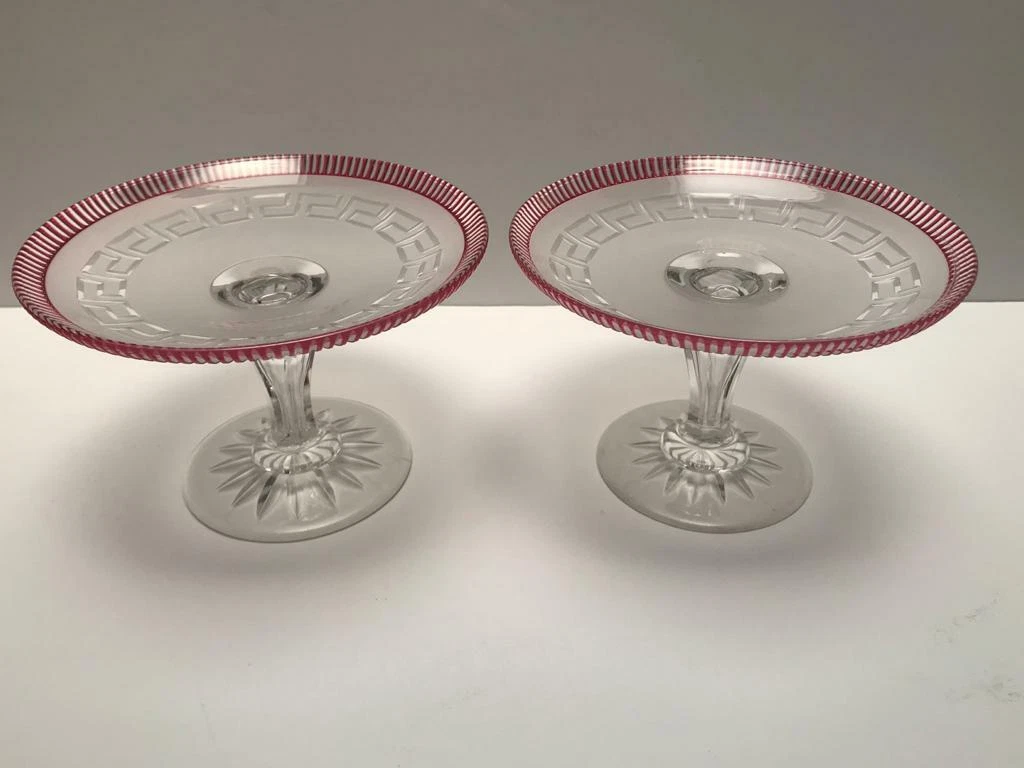
Sold on eBay May 11th, 2025
BACCARAT CRYSTAL RED CUT TO CLEAR TAZZA WITH ACID FROSTED DETAILS RARE
BACCARAT CRYSTAL RED CUT TO CLEAR TAZZA WITH ACID FROSTED DETAILS VERY RAREAntique magnificent and unusual pair of BACCARAT COMPOTIERS. They have a beautiful simple red cut to clear border and surround a acid frosted center with a greek key design into it. The stem is hand blown with a bubble and a acid frosted base with a clear cut star. Made around the turn of the century 1900 and of course not signed. Pieces pre 1940 utilized paper stickers which were removed due to cleaning. The compotier is 5" tall 6 1/2" round. BACCARATThis history of Baccarat spans two hundred years, numerous wars, and unsurpassed advancement in crystal design and manufacturing. Baccarat is a small French town of 600 situated 250 miles east of Paris. In 1764, slightly prior to the French Revolution, Monseigneur de Montmorency-Laval, the Bishop of Metz, petitioned King Louis XV to allow him to open a glassworks factory on the banks of the River Meurthe. The reason for the Bishop's interest in opening a glassworks factory was that he owned thousands of acres of old growth forests. In order to turn a profit on the deforestation of his land, the Bishop needed to find some industry that would consume lots of firewood. In 1765, the Compagnie des Cristalleries de Baccarat was established. The Bishop employed the influence of the church to locate an investor to build the factory. His next move was to find an architect and technician to run the factory. A man named Antoine Renaut was hired to oversee the building and running of the Baccarat factory. Baccarat flourished in the coming decades. By the beginnings of the French Revolution, the company employed a workforce of 400 people. It must be noted that Baccarat was opened during the age of reason and enlightenment. The managers at Baccarat decided to employee many of the social concepts concerning individual rights and human dignity that arose from the new social philosophies of the period. A small utopian community was built at the Baccarat factory that housed over 70 families. Although Baccarat was ahead of their time in concerning themselves with the welfare of their employees, their motives were not entirely altruistic. The firing of glass at the time was still an imperfect art and was influenced by many factors, including the weather. It was important to have Baccarat's master craftsmen very close to the factory in order to produce the best possible product. During this time, the company mainly produced bottles, mirrors, and windows panes. Baccarat met a formidable challenge at the beginning of the French Revolution. Economic instability was common in France at this time, however, the situation worsened as the country collapsed into civil war. France's economic situation continued to worsen with the Napoleonic wars that swept across Europe during the early 19th century. By 1816, inflation caused the company to operate at a loss and the workforce was reduced to less than 70 people. During that same year, the factory was sold to a Belgian expert in the production of glass. The purchaser, Monsieur d'Artigues bought the company with 2,845 ounces of solid gold. Monsieur d'Artigues was an ambitious man who set his sites on making Baccarat one of the most prestigious names in glass in Europe and the world. In 1838, a manager at Baccarat discovered a way to produce full-lead crystal that could be colored. The formula was one of the company's most closely guarded trade secrets. However, the information was leaked to the Bohemians living in the area who produced similar works to those of Baccarat. There was no competition between Baccarat and the Bohemians, however, as the Bohemian interest was purely artistic and they philosophically were not interested in making a profit. The factory continued to grow in prestige throughout the remainder of the 19th century. By the end of the 19th century, Baccarat had earned the reputation of being the "Crystal of Kings." This title is one that the company bears to this day. Baccarat's stemware and objects d'art adorned the tables of the late Czar and Czarina of Russia, the Emperor of Japan, the late Sultan of Turkey, the King of Siam, Presidents Theodore Roosevelt and Franklin Delano Roosevelt, the last three kings of France - Louis XVIII, Charles X, and Louis Philippe, all the Presidents of the French Republic, the Late Aga Kahn, Pope Benedict XV, President of the Republic of Chile, the former king of Portugal, the late king of Spain, the King of Greece, Emperor Haile Selassie of Ethiopia, the late Wilhelm II of Germany, the US State Departments' many legations and European Embassies, all of the Maharajahs of India, and King Ibn of Saudia Arabia. For display pieces for the famous Paris Exhibition of 1889 (the same exhibition during which the Eiffel Tower was built), Baccarat created two of its most popular pattern Harcourt and Gascogne. Today, Harcourt is one of the Pope's stemware patterns at the Vatican. (Condition: Pre-Owned)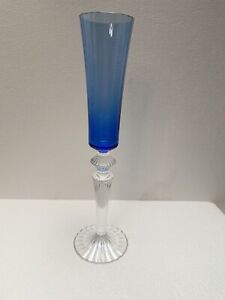
Sold on eBay October 7th, 2023
BACCARAT "MILLE NUITS' AQUA AND CLEAR SET OF 3 GLASSES #394
BACCARAT "MILLE NUITS' AQUA AND CLEAR GLASS SET OF 3 Magnificent set of Baccarat MILLE NUIT champagne glasses in aqua and clear crystal. The base of the glass is heavily cut and sparkles as it goes up the stem to a large jewel that all parts are cut. The bowl is a beautiful shade of aqua and has an optic effect that catches the light. The entire glass on a table shimmers and very elegant. This is a must for those who entertain or possibly an upcoming wedding gift. Dimensions: HEIGHT: 11 1/2 inches Width: 3 history of Baccarat spans two hundred years, numerous wars, and unsurpassed advancement in crystal design and manufacturing. Baccarat is a small French town of 600 situated 250 miles east of Paris. In 1764, slightly prior to the French Revolution, Monseigneur de Montmorency Laval the Bishop of Metz, petitioned King Louis XV to allow him to open a glassworks factory on the banks of the River Meurthe. The reason for the Bishop’s interest in opening a glassworks factory was that he owned thousands of acres of old growth forests. In order to turn a profit on the deforestation of his land, the Bishop needed to find some industry that would consume lots of firewood. In 1765, the Compagnie des Cristalleries de Baccarat was established. The Bishop employed the influence of the church to locate an investor to build the factory. His next move was to find an architect and technician to run the factory. A man named Antoine Renaut was hired to oversee the building and running of the Baccarat factory. Baccarat flourished in the coming decades. By the beginnings of the French Revolution, the company employed a workforce of 400 people. It must be noted that Baccarat was opened during the age of reason and enlightenment. The managers at Baccarat decided to employee many of the social concepts concerning individual rights and human dignity that arose from the new social philosophies of the period. A small utopian community was built at the Baccarat factory that housed over 70 families. Although Baccarat was ahead of their time in concerning themselves with the welfare of their employees, their motives were not entirely altruistic. The firing of glass at the time was still an imperfect art and was influenced by many factors, including the weather. It was important to have Baccarat’s master craftsmen very close to the factory in order to produce the best possible product. During this time, the company mainly produced bottles, mirrors, and windows panes. Baccarat met a formidable challenge at the beginning of the French Revolution. Economic instability was common in France at this time, however, the situation worsened as the country collapsed into civil war. France’s economic situation continued to worsen with the Napoleonic wars that swept across Europe during the early 19th century. By 1816, inflation caused the company to operate at a loss and the workforce was reduced to less than 70 people. During that same year, the factory was sold to a Belgian expert in the production of glass. The purchaser, Monsieur d’Artigues bought the company with 2,845 ounces of solid gold. Monsieur d’Artigues was an ambitious man who set his sites on making Baccarat one of the most prestigious names in glass in Europe and the world. In 1838, a manager at Baccarat discovered a way to produce a full-lead crystal that could be colored. The formula was one of the company’s most closely guarded trade secrets. However, the information was leaked to the Bohemians living in the area who produced similar works to those of Baccarat. There was no competition between Baccarat and the Bohemians, however, as the Bohemian interest was purely artistic and they philosophically were not interested in making a profit. The factory continued to grow in prestige throughout the remainder of the 19th century. By the end of the 19th century, Baccarat had earned the reputation of being the “Crystal of Kings.” This title is one that the company bears to this day. Baccarat’s stemware and objects d’art adorned the tables of the late Czar and Czarina of Russia, the Emperor of Japan, the late Sultan of Turkey, the King of Siam, Presidents Theodore Roosevelt and Franklin Delano Roosevelt, the last three kings of France – Louis XVIII, Charles X, and Louis Philippe, all the Presidents of the French Republic, the Late Aga Kahn, Pope Benedict XV, President of the Republic of Chile, the former king of Portugal, the late king of Spain, the King of Greece, Emperor Haile Selassie of Ethiopia, the late Wilhelm II of Germany, the US State Departments’ many legations and European Embassies, all of the Maharajahs of India, and King Ibn of Saudia Arabia. For display pieces for the famous Paris Exhibition of 1889 (the same exhibition during which the Eiffel Tower was built), Baccarat created two of its most popular pattern Harcourt and Gascogne. Today, Harcourt is one of the Pope’s stemware patterns at the Vatican. (Condition: Pre-Owned)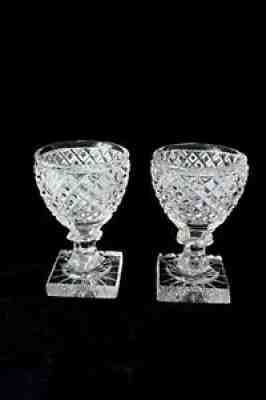
Sold on eBay Nov 04, 2021
Antique Baccarat -Voneche cut crystal Empire glasses 1810-1830
In 1802, Aimé-Gabriel d'Artigues (1773-1848), a French financier and industrialist, bought the old glass factory in Vonêche, Belgium. In 1816, d' Artigues buys a crystal and glass factory in Baccarat (French Lorraine), where he hires two hundred and fifty workers from Vonêche to produce the famous Baccarat crystal.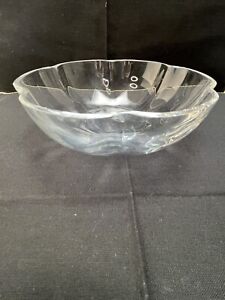
Sold on eBay August 25th, 2023
BACCARAT LARGE "CORAIL" SERVING BOWLS. CONTEMPORARY CRYSTAL #425
BACCARAT LARGE "CORAIL" SERVING BOWLS. CONTEMPORARY CRYSTALGREAT SIZE AND MULTI PURPOSE. CAN BE USED TO SERVE PART OF YOUR DINNER IN, CAN BE FOR A HOMEMADE DESSERT THIS SIZE IS IDEAL FOR 4-6 THERE ARE 3 BOWLS HOWEVER YOU ARE ONLY BE CHARGED FOR 2. ONE OF THE BOWLS HAS MANY SHELF SCRATCHES SO IT IS BEING OFFERED AS FREE. THERE ARE 3 LISTINGS FOR THESE BOWLS AND WOULD WORK VERY GOOD FOR SOMEONE WHO DOES ALOT OF ENTERTAINING WHEN THESE WERE OFFERED IN 1960 THE PRICE PRICE WAS 300 DOLLARS. THINK OF WHAT YOU MIGHT USE THESE FOR. HEIGHT: 3" WIDTH: 7 3/4" BACCARATThis history of Baccarat spans two hundred years, numerous wars, and unsurpassed advancement in crystal design and manufacturing. Baccarat is a small French town of 600 situated 250 miles east of Paris. In 1764, slightly prior to the French Revolution, Monseigneur de Montmorency Laval the Bishop of Metz, petitioned King Louis XV to allow him to open a glassworks factory on the banks of the River Meurthe. The reason for the Bishop’s interest in opening a glassworks factory was that he owned thousands of acres of old growth forests. In order to turn a profit on the deforestation of his land, the Bishop needed to find some industry that would consume lots of firewood. In 1765, the Compagnie des Cristalleries de Baccarat was established. The Bishop employed the influence of the church to locate an investor to build the factory. His next move was to find an architect and technician to run the factory. A man named Antoine Renaut was hired to oversee the building and running of the Baccarat factory. Baccarat flourished in the coming decades. By the beginnings of the French Revolution, the company employed a workforce of 400 people. It must be noted that Baccarat was opened during the age of reason and enlightenment. The managers at Baccarat decided to employee many of the social concepts concerning individual rights and human dignity that arose from the new social philosophies of the period. A small utopian community was built at the Baccarat factory that housed over 70 families. Although Baccarat was ahead of their time in concerning themselves with the welfare of their employees, their motives were not entirely altruistic. The firing of glass at the time was still an imperfect art and was influenced by many factors, including the weather. It was important to have Baccarat’s master craftsmen very close to the factory in order to produce the best possible product. During this time, the company mainly produced bottles, mirrors, and windows panes. Baccarat met a formidable challenge at the beginning of the French Revolution. Economic instability was common in France at this time, however, the situation worsened as the country collapsed into civil war. France’s economic situation continued to worsen with the Napoleonic wars that swept across Europe during the early 19th century. By 1816, inflation caused the company to operate at a loss and the workforce was reduced to less than 70 people. During that same year, the factory was sold to a Belgian expert in the production of glass. The purchaser, Monsieur d’Artigues bought the company with 2,845 ounces of solid gold. Monsieur d’Artigues was an ambitious man who set his sites on making Baccarat one of the most prestigious names in glass in Europe and the world. In 1838, a manager at Baccarat discovered a way to produce full-lead crystal that could be colored. The formula was one of the company’s most closely guarded trade secrets. However, the information was leaked to the Bohemians living in the area who produced similar works to those of Baccarat. There was no competition between Baccarat and the Bohemians, however, as the Bohemian interest was purely artistic and they philosophically were not interested in making a profit. The factory continued to grow in prestige throughout the remainder of the 19th century. By the end of the 19th century, Baccarat had earned the reputation of being the “Crystal of Kings.” This title is one that the company bears to this day. Baccarat’s stemware and objects d’art adorned the tables of the late Czar and Czarina of Russia, the Emperor of Japan, the late Sultan of Turkey, the King of Siam, Presidents Theodore Roosevelt and Franklin Delano Roosevelt, the last three kings of France – Louis XVIII, Charles X, and Louis Philippe, all the Presidents of the French Republic, the Late Aga Kahn, Pope Benedict XV, President of the Republic of Chile, the former king of Portugal, the late king of Spain, the King of Greece, Emperor Haile Selassie of Ethiopia, the late Wilhelm II of Germany, the US State Departments’ many legations and European Embassies, all of the Maharajahs of India, and King Ibn of Saudia Arabia. For display pieces for the famous Paris Exhibition of 1889 (the same exhibition during which the Eiffel Tower was built), Baccarat created two of its most popular pattern Harcourt and Gascogne. Today, Harcourt is one of the Pope’s stemware patterns at the Vatican. (Condition: Pre-Owned)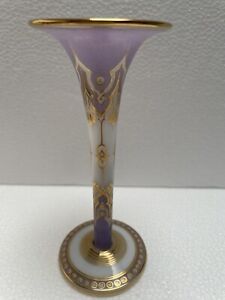
Sold on eBay July 28th, 2023
MAGNIFICENT BACCARAT OPALINE SOLIFLORE VASE #363
MAGNIFICENT BACCARAT OPALINE SOLIFLORE VASE Mint condition Antique ornate Baccarat vase with an Art Nouveau design. Beautifully hand painted with all the flare of the art nouveau period. Its main background is a pale lavender the detail and gracefulness of the painting and all embellished with gold details. This piece demonstrates the excellent workmanship only associated with the top French crystalleries. This would make a great gift or something to add to a collectors display or in a display cabinet Dimensions: DIAMETER: 2 1/2 INCHES / HEIGHT: 6 INCHESBACCARATThis history of Baccarat spans two hundred years, numerous wars, and unsurpassed advancement in crystal design and manufacturing. Baccarat is a small French town of 600 situated 250 miles east of Paris. In 1764, slightly prior to the French Revolution, Monseigneur de Montmorency Laval the Bishop of Metz, petitioned King Louis XV to allow him to open a glassworks factory on the banks of the River Meurthe. The reason for the Bishop’s interest in opening a glassworks factory was that he owned thousands of acres of old growth forests. In order to turn a profit on the deforestation of his land, the Bishop needed to find some industry that would consume lots of firewood. In 1765, the Compagnie des Cristalleries de Baccarat was established. The Bishop employed the influence of the church to locate investor to build the factory. His next move was to find an architect and technician to run the factory. A man named Antoine Renaut was hired to oversee the building and running of the Baccarat factory. Baccarat flourished in the coming decades. By the beginnings of the French Revolution, the company employed a work force of 400 people. It must be noted that Baccarat was opened during the age of reason and enlightenment. The managers at Baccarat decided to employee many of the social concepts concerning individual rights and human dignity that arose from the new social philosophies of the period. A small utopian community was built at the Baccarat factory that housed over 70 families. Although Baccarat was ahead of their time in concerning themselves with the welfare of their employees, their motives were not entirely altruistic. The firing of glass at the time was still an imperfect art and was influenced by many factors, including the weather. It was important to have Baccarat’s master craftsmen very close to the factory in order to produce the best possible product. During this time, the company mainly produced bottles, mirrors, and windows panes. Baccarat met a formidable challenge at the beginning of the French Revolution. Economic instability was common in France at this time, however, the situation worsened as the country collapsed into civil war. France’s economic situation continued to worsen with the Napoleonic wars that swept across Europe during the early 19th century. By 1816, inflation caused the company to operate at a loss and the work force was reduced to less than 70 people. During that same year, the factory was sold to a Belgian expert in the production of glass. The purchaser, Monsieur d’Artigues bought the company with 2,845 ounces of solid gold. Monsieur d’Artigues was an ambitious man who set his sites on making Baccarat one of the most prestigious names in glass in Europe and the world. In 1838, a manager at Baccarat discovered a way to produce full-lead crystal that could be colored. The formula was one of the company’s most closely guarded trade secrets. However, the information was leaked to the Bohemians living in the area who produced similar works to those of Baccarat. There was no competition between Baccarat and the Bohemians however, as the Bohemian interest was purely artistic and they philosophically were not interested in making a profit. The factory continued to grow in prestige throughout the remainder of the 19th century. By the end of the 19th century, Baccarat had earned the reputation of being the “Crystal of Kings.” This title is one that the company bears to this day. Baccarat’s stemware and objects d’art adorned the tables of the late Czar and Czarina of Russia, the Emperor of Japan, the late Sultan of Turkey, the King of Siam, Presidents Theodore Roosevelt and Franklin Delano Roosevelt, the last three kings of France – Louis XVIII, Charles X, and Louis Philippe, all the Presidents of the French Republic, the Late Aga Kahn, Pope Benedict XV, President of the Republic of Chile, the former king of Portugal, the late king of Spain, the King of Greece, Emperor Haile Selassie of Ethiopia, the late Wilhelm II of Germany, the US State Departments’ many legations and European Embassies, all of the Maharajahs of India, and King Ibn of Saudia Arabia. For display pieces for the famous Paris Exhibition of 1889 (the same exhibition during which the Eiffel Tower was built), Baccarat created two of its most popular pattern Harcourt and Gascogne. Today, Harcourt is one of the Pope’s stemware patterns at the Vatican. (Condition: Pre-Owned)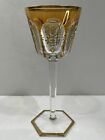
Sold on eBay May 21st, 2024
MAGNIFICENT SET OF BACCARAT " HARCOURT GOLD " WINE SOLD INDIVIDUALLY #534
BACCARAT GLASSES "HARCOURT GOLD" 7 AVAILABLE COLORED CUT TO CLEAR SOLD INDIVIDUALLY #534 Magnificent set of Baccarat colored cut to clear Harcourt Gold wine goblets The intricate scallop cutting on the glasses side leaving a vignette to place the 24k filagree pattern the cup leads to a 6 sided stem and base the base highlighted like the glass top with a band of cold. This is not a common pattern especially in color and these are perfect. (2) Amethyst (1) Emerald (1) Cobalt (1) Lime (1) Orange (1) Fuschia I have never had them in this tall model in color in 50 years of french luxury goods. Dimensions: HEIGHT: 7 1/2 inches Width: 3" history of Baccarat spans two hundred years, numerous wars, and unsurpassed advancement in crystal design and manufacturing. Baccarat is a small French town of 600 situated 250 miles east of Paris. In 1764, slightly prior to the French Revolution, Monseigneur de Montmorency Laval the Bishop of Metz, petitioned King Louis XV to allow him to open a glassworks factory on the banks of the River Meurthe. The reason for the Bishop’s interest in opening a glassworks factory was that he owned thousands of acres of old growth forests. In order to turn a profit on the deforestation of his land, the Bishop needed to find some industry that would consume lots of firewood. In 1765, the Compagnie des Cristalleries de Baccarat was established. The Bishop employed the influence of the church to locate an investor to build the factory. His next move was to find an architect and technician to run the factory. A man named Antoine Renaut was hired to oversee the building and running of the Baccarat factory. Baccarat flourished in the coming decades. By the beginnings of the French Revolution, the company employed a workforce of 400 people. It must be noted that Baccarat was opened during the age of reason and enlightenment. The managers at Baccarat decided to employee many of the social concepts concerning individual rights and human dignity that arose from the new social philosophies of the period. A small utopian community was built at the Baccarat factory that housed over 70 families. Although Baccarat was ahead of their time in concerning themselves with the welfare of their employees, their motives were not entirely altruistic. The firing of glass at the time was still an imperfect art and was influenced by many factors, including the weather. It was important to have Baccarat’s master craftsmen very close to the factory in order to produce the best possible product. During this time, the company mainly produced bottles, mirrors, and windows panes. Baccarat met a formidable challenge at the beginning of the French Revolution. Economic instability was common in France at this time, however, the situation worsened as the country collapsed into civil war. France’s economic situation continued to worsen with the Napoleonic wars that swept across Europe during the early 19th century. By 1816, inflation caused the company to operate at a loss and the workforce was reduced to less than 70 people. During that same year, the factory was sold to a Belgian expert in the production of glass. The purchaser, Monsieur d’Artigues bought the company with 2,845 ounces of solid gold. Monsieur d’Artigues was an ambitious man who set his sites on making Baccarat one of the most prestigious names in glass in Europe and the world. In 1838, a manager at Baccarat discovered a way to produce a full-lead crystal that could be colored. The formula was one of the company’s most closely guarded trade secrets. However, the information was leaked to the Bohemians living in the area who produced similar works to those of Baccarat. There was no competition between Baccarat and the Bohemians, however, as the Bohemian interest was purely artistic and they philosophically were not interested in making a profit. The factory continued to grow in prestige throughout the remainder of the 19th century. By the end of the 19th century, Baccarat had earned the reputation of being the “Crystal of Kings.” This title is one that the company bears to this day. Baccarat’s stemware and objects d’art adorned the tables of the late Czar and Czarina of Russia, the Emperor of Japan, the late Sultan of Turkey, the King of Siam, Presidents Theodore Roosevelt and Franklin Delano Roosevelt, the last three kings of France – Louis XVIII, Charles X, and Louis Philippe, all the Presidents of the French Republic, the Late Aga Kahn, Pope Benedict XV, President of the Republic of Chile, the former king of Portugal, the late king of Spain, the King of Greece, Emperor Haile Selassie of Ethiopia, the late Wilhelm II of Germany, the US State Departments’ many legations and European Embassies, all of the Maharajahs of India, and King Ibn of Saudia Arabia. For display pieces for the famous Paris Exhibition of 1889 (the same exhibition during which the Eiffel Tower was built), Baccarat created two of its most popular pattern Harcourt and Gascogne. Today, Harcourt is one of the Pope’s stemware patterns at the Vatican. (Condition: Brand New)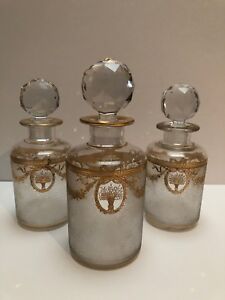
Sold on eBay January 15th, 2024
BACCARAT FROSTED PERFUME BOTTLES WITH ELABORATE GOLD GARLANDS AND FLOWERS
eBay BACCARAT MAGNIFICENT FROSTED PERFUME BOTTLES WITH GOLD GARLANDS AND FLOWERS SET OF 3Magnificent and in great condition. Antique large size perfume bottles with frosted backgrounds and gold garlands urns with flower bows and gold trim. These pieces execute many of the fine work Baccarat was famous for. The stoppers are very ornate cut crystal balls with a gold star on top. The pieces have miniscule gold loss. These pieces date from the 1900-1920's This is a beautiful and magnificent collection demonstrating the masterful work of Baccarat. Makes a great addition to a collectors collection or as a table piece or a focal piece in a vitrine. Dimensions: WIDTH : 3" INCH / HEIGHT: 7 1/2" INCH (2 bottles) WIDTH : 3 1/4" INCH / HEIGHT: 8 1/4" INCH (1 bottle) BACCARATThis history of Baccarat spans two hundred years, numerous wars, and unsurpassed advancement in crystal design and manufacturing. Baccarat is a small French town of 600 situated 250 miles east of Paris. In 1764, slightly prior to the French Revolution, Monseigneur de Montmorency Laval the Bishop of Metz, petitioned King Louis XV to allow him to open a glassworks factory on the banks of the River Meurthe. The reason for the Bishop’s interest in opening a glassworks factory was that he owned thousands of acres of old growth forests. In order to turn a profit on the deforestation of his land, the Bishop needed to find some industry that would consume lots of firewood. In 1765, the Compagnie des Cristalleries de Baccarat was established. The Bishop employed the influence of the church to locate an investor to build the factory. His next move was to find an architect and technician to run the factory. A man named Antoine Renaut was hired to oversee the building and running of the Baccarat factory. Baccarat flourished in the coming decades. By the beginnings of the French Revolution, the company employed a workforce of 400 people. It must be noted that Baccarat was opened during the age of reason and enlightenment. The managers at Baccarat decided to employee many of the social concepts concerning individual rights and human dignity that arose from the new social philosophies of the period. A small utopian community was built at the Baccarat factory that housed over 70 families. Although Baccarat was ahead of their time in concerning themselves with the welfare of their employees, their motives were not entirely altruistic. The firing of glass at the time was still an imperfect art and was influenced by many factors, including the weather. It was important to have Baccarat’s master craftsmen very close to the factory in order to produce the best possible product. During this time, the company mainly produced bottles, mirrors, and windows panes. Baccarat met a formidable challenge at the beginning of the French Revolution. Economic instability was common in France at this time, however, the situation worsened as the country collapsed into civil war. France’s economic situation continued to worsen with the Napoleonic wars that swept across Europe during the early 19th century. By 1816, inflation caused the company to operate at a loss and the workforce was reduced to less than 70 people. During that same year, the factory was sold to a Belgian expert in the production of glass. The purchaser, Monsieur d’Artigues bought the company with 2,845 ounces of solid gold. Monsieur d’Artigues was an ambitious man who set his sites on making Baccarat one of the most prestigious names in glass in Europe and the world. In 1838, a manager at Baccarat discovered a way to produce a full-lead crystal that could be colored. The formula was one of the company’s most closely guarded trade secrets. However, the information was leaked to the Bohemians living in the area who produced similar works to those of Baccarat. There was no competition between Baccarat and the Bohemians, however, as the Bohemian interest was purely artistic and they philosophically were not interested in making a profit. The factory continued to grow in prestige throughout the remainder of the 19th century. By the end of the 19th century, Baccarat had earned the reputation of being the “Crystal of Kings.” This title is one that the company bears to this day. Baccarat’s stemware and objects d’art adorned the tables of the late Czar and Czarina of Russia, the Emperor of Japan, the late Sultan of Turkey, the King of Siam, Presidents Theodore Roosevelt and Franklin Delano Roosevelt, the last three kings of France – Louis XVIII, Charles X, and Louis Philippe, all the Presidents of the French Republic, the Late Aga Kahn, Pope Benedict XV, President of the Republic of Chile, the former king of Portugal, the late king of Spain, the King of Greece, Emperor Haile Selassie of Ethiopia, the late Wilhelm II of Germany, the US State Departments’ many legations and European Embassies, all of the Maharajahs of India, and King Ibn of Saudia Arabia. For display pieces for the famous Paris Exhibition of 1889 (the same exhibition during which the Eiffel Tower was built), Baccarat created two of its most popular pattern Harcourt and Gascogne. Today, Harcourt is one of the Pope’s stemware patterns at the Vatican.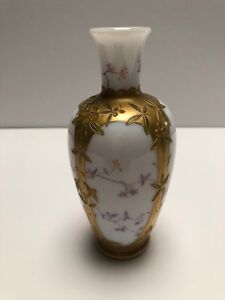
Sold on eBay July 28th, 2023
MAGNIFICENT BACCARAT OPALINE VASE HAND PAINTED WITH ORNATE GOLD WORK
BACCARAT ORNATE AND MAGNIFICENT WHITE OPALINE GOLD AND FLORAL VASEMagnificent and in mint condition. Antique ornate Baccarat vase divided into 4 panels that are surrounded by elaborate gold work with enamel flowers and leaves. The inset panels are painted with pastel branches of flowers following around the vase. The detail and gracefulness of the painting is beautiful and all embellished with gold details. No word can do justice to the work on this base All the gold branches and leaves are raised and the centers enameled in multi-color. This piece demonstrates the excellent workmanship only associated with the Baccarat crystallerie. This would make a great gift or something to add to a collectors display or a major focal point for a vitrine. Dimensions: DIAMETER: 2 3/4 INCHES / HEIGHT: 6 history of Baccarat spans two hundred years, numerous wars, and unsurpassed advancement in crystal design and manufacturing. Baccarat is a small French town of 600 situated 250 miles east of Paris. In 1764, slightly prior to the French Revolution, Monseigneur de Montmorency Laval the Bishop of Metz, petitioned King Louis XV to allow him to open a glassworks factory on the banks of the River Meurthe. The reason for the Bishop’s interest in opening a glassworks factory was that he owned thousands of acres of old growth forests. In order to turn a profit on the deforestation of his land, the Bishop needed to find some industry that would consume lots of firewood. In 1765, the Compagnie des Cristalleries de Baccarat was established. The Bishop employed the influence of the church to locate an investor to build the factory. His next move was to find an architect and technician to run the factory. A man named Antoine Renaut was hired to oversee the building and running of the Baccarat factory. Baccarat flourished in the coming decades. By the beginnings of the French Revolution, the company employed a workforce of 400 people. It must be noted that Baccarat was opened during the age of reason and enlightenment. The managers at Baccarat decided to employee many of the social concepts concerning individual rights and human dignity that arose from the new social philosophies of the period. A small utopian community was built at the Baccarat factory that housed over 70 families. Although Baccarat was ahead of their time in concerning themselves with the welfare of their employees, their motives were not entirely altruistic. The firing of glass at the time was still an imperfect art and was influenced by many factors, including the weather. It was important to have Baccarat’s master craftsmen very close to the factory in order to produce the best possible product. During this time, the company mainly produced bottles, mirrors, and windows panes. Baccarat met a formidable challenge at the beginning of the French Revolution. Economic instability was common in France at this time, however, the situation worsened as the country collapsed into civil war. France’s economic situation continued to worsen with the Napoleonic wars that swept across Europe during the early 19th century. By 1816, inflation caused the company to operate at a loss and the workforce was reduced to less than 70 people. During that same year, the factory was sold to a Belgian expert in the production of glass. The purchaser, Monsieur d’Artigues bought the company with 2,845 ounces of solid gold. Monsieur d’Artigues was an ambitious man who set his sites on making Baccarat one of the most prestigious names in glass in Europe and the world. In 1838, a manager at Baccarat discovered a way to produce a full-lead crystal that could be colored. The formula was one of the company’s most closely guarded trade secrets. However, the information was leaked to the Bohemians living in the area who produced similar works to those of Baccarat. There was no competition between Baccarat and the Bohemians, however, as the Bohemian interest was purely artistic and they philosophically were not interested in making a profit. The factory continued to grow in prestige throughout the remainder of the 19th century. By the end of the 19th century, Baccarat had earned the reputation of being the “Crystal of Kings.” This title is one that the company bears to this day. Baccarat’s stemware and objects d’art adorned the tables of the late Czar and Czarina of Russia, the Emperor of Japan, the late Sultan of Turkey, the King of Siam, Presidents Theodore Roosevelt and Franklin Delano Roosevelt, the last three kings of France – Louis XVIII, Charles X, and Louis Philippe, all the Presidents of the French Republic, the Late Aga Kahn, Pope Benedict XV, President of the Republic of Chile, the former king of Portugal, the late king of Spain, the King of Greece, Emperor Haile Selassie of Ethiopia, the late Wilhelm II of Germany, the US State Departments’ many legations and European Embassies, all of the Maharajahs of India, and King Ibn of Saudia Arabia. For display pieces for the famous Paris Exhibition of 1889 (the same exhibition during which the Eiffel Tower was built), Baccarat created two of its most popular pattern Harcourt and Gascogne. Today, Harcourt is one of the Pope’s stemware patterns at the Vatican.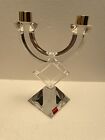
Sold on eBay June 13th, 2024
BACCARAT "SYMBOLE" CANDLESTICK FOR 2 CANDLES #372
RARE BACCARAT "SYMBOLE" CANDLE STICK FOR 2 CANDLESRarely seen the Symbole candlestick for 2 candles is magnificent. It starts on a clear crystal pyramid and then you find a clear see thru diamond shape ending with two curved arms bearing a diamond shape crystal piece with a dore gold bronze candle holder. This is contemporarqy and blends with all interiors I is in mint condition and never used. It is 8 1/4" high x 6" wide. wonderful gift no longer made"BACCARAT This history of Baccarat spans two hundred years, numerous wars, and unsurpassed advancement in crystal design and manufacturing. Baccarat is a small French town of 600 situated 250 miles east of Paris. In 1764, slightly prior to the French Revolution, Monseigneur de Montmorency Laval the Bishop of Metz, petitioned King Louis XV to allow him to open a glassworks factory on the banks of the River Meurthe. The reason for the Bishop’s interest in opening a glassworks factory was that he owned thousands of acres of old growth forests. In order to turn a profit on the deforestation of his land, the Bishop needed to find some industry that would consume lots of firewood. In 1765, the Compagnie des Cristalleries de Baccarat was established. The Bishop employed the influence of the church to locate an investor to build the factory. His next move was to find an architect and technician to run the factory. A man named Antoine Renaut was hired to oversee the building and running of the Baccarat factory. Baccarat flourished in the coming decades. By the beginnings of the French Revolution, the company employed a workforce of 400 people. It must be noted that Baccarat was opened during the age of reason and enlightenment. The managers at Baccarat decided to employee many of the social concepts concerning individual rights and human dignity that arose from the new social philosophies of the period. A small utopian community was built at the Baccarat factory that housed over 70 families. Although Baccarat was ahead of their time in concerning themselves with the welfare of their employees, their motives were not entirely altruistic. The firing of glass at the time was still an imperfect art and was influenced by many factors, including the weather. It was important to have Baccarat’s master craftsmen very close to the factory in order to produce the best possible product. During this time, the company mainly produced bottles, mirrors, and windows panes. Baccarat met a formidable challenge at the beginning of the French Revolution. Economic instability was common in France at this time, however, the situation worsened as the country collapsed into civil war. France’s economic situation continued to worsen with the Napoleonic wars that swept across Europe during the early 19th century. By 1816, inflation caused the company to operate at a loss and the workforce was reduced to less than 70 people. During that same year, the factory was sold to a Belgian expert in the production of glass. The purchaser, Monsieur d’Artigues bought the company with 2,845 ounces of solid gold. Monsieur d’Artigues was an ambitious man who set his sites on making Baccarat one of the most prestigious names in glass in Europe and the world. In 1838, a manager at Baccarat discovered a way to produce a full-lead crystal that could be colored. The formula was one of the company’s most closely guarded trade secrets. However, the information was leaked to the Bohemians living in the area who produced similar works to those of Baccarat. There was no competition between Baccarat and the Bohemians, however, as the Bohemian interest was purely artistic and they philosophically were not interested in making a profit. The factory continued to grow in prestige throughout the remainder of the 19th century. By the end of the 19th century, Baccarat had earned the reputation of being the “Crystal of Kings.” This title is one that the company bears to this day. Baccarat’s stemware and objects d’art adorned the tables of the late Czar and Czarina of Russia, the Emperor of Japan, the late Sultan of Turkey, the King of Siam, Presidents Theodore Roosevelt and Franklin Delano Roosevelt, the last three kings of France – Louis XVIII, Charles X, and Louis Philippe, all the Presidents of the French Republic, the Late Aga Kahn, Pope Benedict XV, President of the Republic of Chile, the former king of Portugal, the late king of Spain, the King of Greece, Emperor Haile Selassie of Ethiopia, the late Wilhelm II of Germany, the US State Departments’ many legations and European Embassies, all of the Maharajahs of India, and King Ibn of Saudia Arabia. For display pieces for the famous Paris Exhibition of 1889 (the same exhibition during which the Eiffel Tower was built), Baccarat created two of its most popular pattern Harcourt and Gascogne. Today, Harcourt is one of the Pope’s stemware patterns at the Vatican. (Condition: Pre-Owned)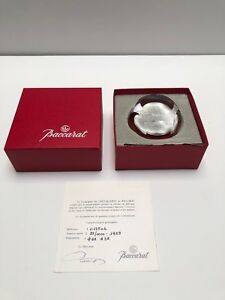
Sold on eBay November 7th, 2023
BACCARAT LIMITED EDITION PRESSE PAPIER #28/1000 CRYSTAL
eBay BACCARAT LIMITED EDITION PRESSE PAPIER #28/1000 BACCARAT presse papier depicting the FETE DE LA FEDERATION AU CHAMP DE MARS LE 14 JUILLET 1790 as conserved in the MUSEE CARNAVALET It is numbered #28/1000 and was made in 1989 and comes with the certificate of authenticity and the original box and history brochure. The detail is amazing and the depth of the scene magnificent. A very important piece to the paper weight collector or for someone who wants a piece of history on their desk. Size: 2 1/2" wide x 1 1/2" history of Baccarat spans two hundred years, numerous wars, and unsurpassed advancement in crystal design and manufacturing. Baccarat is a small French town of 600 situated 250 miles east of Paris. In 1764, slightly prior to the French Revolution, Monseigneur de Montmorency Laval the Bishop of Metz, petitioned King Louis XV to allow him to open a glassworks factory on the banks of the River Meurthe. The reason for the Bishop’s interest in opening a glassworks factory was that he owned thousands of acres of old growth forests. In order to turn a profit on the deforestation of his land, the Bishop needed to find some industry that would consume lots of firewood. In 1765, the Compagnie des Cristalleries de Baccarat was established. The Bishop employed the influence of the church to locate an investor to build the factory. His next move was to find an architect and technician to run the factory. A man named Antoine Renaut was hired to oversee the building and running of the Baccarat factory. Baccarat flourished in the coming decades. By the beginnings of the French Revolution, the company employed a workforce of 400 people. It must be noted that Baccarat was opened during the age of reason and enlightenment. The managers at Baccarat decided to employee many of the social concepts concerning individual rights and human dignity that arose from the new social philosophies of the period. A small utopian community was built at the Baccarat factory that housed over 70 families. Although Baccarat was ahead of their time in concerning themselves with the welfare of their employees, their motives were not entirely altruistic. The firing of glass at the time was still an imperfect art and was influenced by many factors, including the weather. It was important to have Baccarat’s master craftsmen very close to the factory in order to produce the best possible product. During this time, the company mainly produced bottles, mirrors, and windows panes. Baccarat met a formidable challenge at the beginning of the French Revolution. Economic instability was common in France at this time, however, the situation worsened as the country collapsed into civil war. France’s economic situation continued to worsen with the Napoleonic wars that swept across Europe during the early 19th century. By 1816, inflation caused the company to operate at a loss and the workforce was reduced to less than 70 people. During that same year, the factory was sold to a Belgian expert in the production of glass. The purchaser, Monsieur d’Artigues bought the company with 2,845 ounces of solid gold. Monsieur d’Artigues was an ambitious man who set his sites on making Baccarat one of the most prestigious names in glass in Europe and the world. In 1838, a manager at Baccarat discovered a way to produce a full-lead crystal that could be colored. The formula was one of the company’s most closely guarded trade secrets. However, the information was leaked to the Bohemians living in the area who produced similar works to those of Baccarat. There was no competition between Baccarat and the Bohemians, however, as the Bohemian interest was purely artistic and they philosophically were not interested in making a profit. The factory continued to grow in prestige throughout the remainder of the 19th century. By the end of the 19th century, Baccarat had earned the reputation of being the “Crystal of Kings.” This title is one that the company bears to this day. Baccarat’s stemware and objects d’art adorned the tables of the late Czar and Czarina of Russia, the Emperor of Japan, the late Sultan of Turkey, the King of Siam, Presidents Theodore Roosevelt and Franklin Delano Roosevelt, the last three kings of France – Louis XVIII, Charles X, and Louis Philippe, all the Presidents of the French Republic, the Late Aga Kahn, Pope Benedict XV, President of the Republic of Chile, the former king of Portugal, the late king of Spain, the King of Greece, Emperor Haile Selassie of Ethiopia, the late Wilhelm II of Germany, the US State Departments’ many legations and European Embassies, all of the Maharajahs of India, and King Ibn of Saudia Arabia. For display pieces for the famous Paris Exhibition of 1889 (the same exhibition during which the Eiffel Tower was built), Baccarat created two of its most popular pattern Harcourt and Gascogne. Today, Harcourt is one of the Pope’s stemware patterns at the Vatican.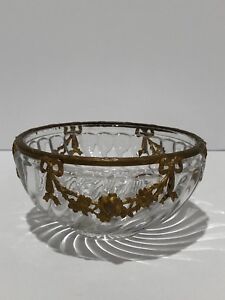
Sold on eBay October 24th, 2023
BACCARAT ANTIQUE BAMBOO PATTERN BOWL WITH GOLD ORMOLU ORNATE DETAIL
eBay BACCARAT ANTIQUE BAMBOO PATTERN BOWL WITH GOLD ORMULU ORNATE and in mint condition. Antique molded a crystal bowl in the bamboo pattern and large swirl molded star on base. Very heavy and with excellent workmanship associated with the top French crystalleries. This is a beautiful and magnificent piece demonstrating the master and articulate work of Baccarat. The ormolu is in pristine condition and the detail of the garlands is beautiful the Makes a great addition to a collectors collection or as a hostess gift or small centerpiece or a focal piece for a vitrine. Dimensions: DIAMETER: 5 INCH / HEIGHT : 2 3/4 history of Baccarat spans two hundred years, numerous wars, and unsurpassed advancement in crystal design and manufacturing. Baccarat is a small French town of 600 situated 250 miles east of Paris. In 1764, slightly prior to the French Revolution, Monseigneur de Montmorency Laval the Bishop of Metz, petitioned King Louis XV to allow him to open a glassworks factory on the banks of the River Meurthe. The reason for the Bishop’s interest in opening a glassworks factory was that he owned thousands of acres of old growth forests. In order to turn a profit on the deforestation of his land, the Bishop needed to find some industry that would consume lots of firewood. In 1765, the Compagnie des Cristalleries de Baccarat was established. The Bishop employed the influence of the church to locate an investor to build the factory. His next move was to find an architect and technician to run the factory. A man named Antoine Renaut was hired to oversee the building and running of the Baccarat factory. Baccarat flourished in the coming decades. By the beginnings of the French Revolution, the company employed a work force of 400 people. It must be noted that Baccarat was opened during the age of reason and enlightenment. The managers at Baccarat decided to employee many of the social concepts concerning individual rights and human dignity that arose from the new social philosophies of the period. A small utopian community was built at the Baccarat factory that housed over 70 families. Although Baccarat was ahead of their time in concerning themselves with the welfare of their employees, their motives were not entirely altruistic. The firing of glass at the time was still an imperfect art and was influenced by many factors, including the weather. It was important to have Baccarat’s master craftsmen very close to the factory in order to produce the best possible product. During this time, the company mainly produced bottles, mirrors, and windows panes. Baccarat met a formidable challenge at the beginning of the French Revolution. Economic instability was common in France at this time, however, the situation worsened as the country collapsed into civil war. France’s economic situation continued to worsen with the Napoleonic wars that swept across Europe during the early 19th century. By 1816, inflation caused the company to operate at a loss and the work force was reduced to less than 70 people. During that same year, the factory was sold to a Belgian expert in the production of glass. The purchaser, Monsieur d’Artigues bought the company with 2,845 ounces of solid gold. Monsieur d’Artigues was an ambitious man who set his sites on making Baccarat one of the most prestigious names in glass in Europe and the world. In 1838, a manager at Baccarat discovered a way to produce full-lead crystal that could be colored. The formula was one of the company’s most closely guarded trade secrets. However, the information was leaked to the Bohemians living in the area who produced similar works to those of Baccarat. There was no competition between Baccarat and the Bohemians however, as the Bohemian interest was purely artistic and they philosophically were not interested in making a profit. The factory continued to grow in prestige throughout the remainder of the 19th century. By the end of the 19th century, Baccarat had earned the reputation of being the “Crystal of Kings.” This title is one that the company bears to this day. Baccarat’s stemware and objects d’art adorned the tables of the late Czar and Czarina of Russia, the Emperor of Japan, the late Sultan of Turkey, the King of Siam, Presidents Theodore Roosevelt and Franklin Delano Roosevelt, the last three kings of France – Louis XVIII, Charles X, and Louis Philippe, all the Presidents of the French Republic, the Late Aga Kahn, Pope Benedict XV, President of the Republic of Chile, the former king of Portugal, the late king of Spain, the King of Greece, Emperor Haile Selassie of Ethiopia, the late Wilhelm II of Germany, the US State Departments’ many legations and European Embassies, all of the Maharajahs of India, and King Ibn of Saudia Arabia. For display pieces for the famous Paris Exhibition of 1889 (the same exhibition during which the Eiffel Tower was built), Baccarat created two of its most popular pattern Harcourt and Gascogne. Today, Harcourt is one of the Pope’s stemware patterns at the Vatican. (Condition: Pre-Owned)
Sold on eBay May 27th, 2024
BACCARAT 3 DESSERT OR SALAD PLATES "PARIS" PATTERN CLEAR #419
BACCARAT DESSERT OR SALAD PLATES PARIS PATTERN CLEAR Antique and truly beautiful set of 12 Baccarat crystal plates. Very contemporary and never used. No a knife mark on them. Would be great with a creative dessert or salad or as them used for hors d'oeuvre Not often do you find a set in this condition. Would be a great gift or something for special evening events.HEIGHT: 1/2 " WIDTH: 6 1/2" BACCARATThis history of Baccarat spans two hundred years, numerous wars, and unsurpassed advancement in crystal design and manufacturing. Baccarat is a small French town of 600 situated 250 miles east of Paris. In 1764, slightly prior to the French Revolution, Monseigneur de Montmorency Laval the Bishop of Metz, petitioned King Louis XV to allow him to open a glassworks factory on the banks of the River Meurthe. The reason for the Bishop’s interest in opening a glassworks factory was that he owned thousands of acres of old growth forests. In order to turn a profit on the deforestation of his land, the Bishop needed to find some industry that would consume lots of firewood. In 1765, the Compagnie des Cristalleries de Baccarat was established. The Bishop employed the influence of the church to locate an investor to build the factory. His next move was to find an architect and technician to run the factory. A man named Antoine Renaut was hired to oversee the building and running of the Baccarat factory. Baccarat flourished in the coming decades. By the beginnings of the French Revolution, the company employed a workforce of 400 people. It must be noted that Baccarat was opened during the age of reason and enlightenment. The managers at Baccarat decided to employee many of the social concepts concerning individual rights and human dignity that arose from the new social philosophies of the period. A small utopian community was built at the Baccarat factory that housed over 70 families. Although Baccarat was ahead of their time in concerning themselves with the welfare of their employees, their motives were not entirely altruistic. The firing of glass at the time was still an imperfect art and was influenced by many factors, including the weather. It was important to have Baccarat’s master craftsmen very close to the factory in order to produce the best possible product. During this time, the company mainly produced bottles, mirrors, and windows panes. Baccarat met a formidable challenge at the beginning of the French Revolution. Economic instability was common in France at this time, however, the situation worsened as the country collapsed into civil war. France’s economic situation continued to worsen with the Napoleonic wars that swept across Europe during the early 19th century. By 1816, inflation caused the company to operate at a loss and the workforce was reduced to less than 70 people. During that same year, the factory was sold to a Belgian expert in the production of glass. The purchaser, Monsieur d’Artigues bought the company with 2,845 ounces of solid gold. Monsieur d’Artigues was an ambitious man who set his sites on making Baccarat one of the most prestigious names in glass in Europe and the world. In 1838, a manager at Baccarat discovered a way to produce full-lead crystal that could be colored. The formula was one of the company’s most closely guarded trade secrets. However, the information was leaked to the Bohemians living in the area who produced similar works to those of Baccarat. There was no competition between Baccarat and the Bohemians, however, as the Bohemian interest was purely artistic and they philosophically were not interested in making a profit. The factory continued to grow in prestige throughout the remainder of the 19th century. By the end of the 19th century, Baccarat had earned the reputation of being the “Crystal of Kings.” This title is one that the company bears to this day. Baccarat’s stemware and objects d’art adorned the tables of the late Czar and Czarina of Russia, the Emperor of Japan, the late Sultan of Turkey, the King of Siam, Presidents Theodore Roosevelt and Franklin Delano Roosevelt, the last three kings of France – Louis XVIII, Charles X, and Louis Philippe, all the Presidents of the French Republic, the Late Aga Kahn, Pope Benedict XV, President of the Republic of Chile, the former king of Portugal, the late king of Spain, the King of Greece, Emperor Haile Selassie of Ethiopia, the late Wilhelm II of Germany, the US State Departments’ many legations and European Embassies, all of the Maharajahs of India, and King Ibn of Saudia Arabia. For display pieces for the famous Paris Exhibition of 1889 (the same exhibition during which the Eiffel Tower was built), Baccarat created two of its most popular pattern Harcourt and Gascogne. Today, Harcourt is one of the Pope’s stemware patterns at the Vatican. (Condition: Pre-Owned)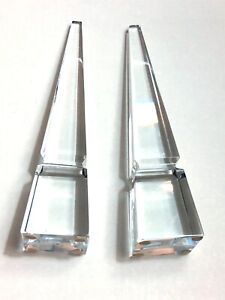
Sold on eBay January 3rd, 2024
VINTAGE 2 BACCARAT Crystal Obelisk Prism Pyramid - Made in France - Original
eBay Vintage 2 French Baccarat Louxor Obelisk Art Crystal Figurine Pillar Prism PyramidA crystal Louxor Obelisk by art decoration for your home.Made in France. 9 7/8" H x 2 1/4" Wweight 2 lb 2 oz. Each One3 very minor chips, barely noticeable Tried to show them in photos. Hard to see.THE PASSION OF A GROUP OF ARTISANSIn 1764, in eastern France, a group of daring artisans set out to transform the four elements of nature (earth, air, fire and water) into glass of absolute quality. In 1816, they perfected their well-kept secret formula to obtain a crystal of incomparable purity.Please read the entire advertisement, check all the photos carefully and ask all questions before and not after bidding, if you have any questions do not hesitate to ask and bid with confidence as my feedback is 100%, good luck! (Condition: Pre-Owned)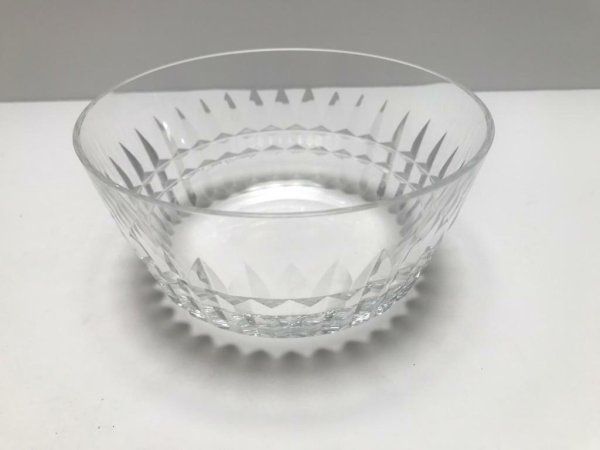
Sold on eBay November 4th, 2024
BACCARAT CRYSTAL CLEAR PICADILLY BOWLS (6)
BACCARAT CRYSTAL FRUIT NUT ICE CREAM OR SNACK and in mint condition. 6 Piccadilly small contemporary bowls with beautiful diamond and incised V cutting. Beautiful pieces demonstrating the master work of Baccarat . Makes a great wedding gift shower gift or just to use for yourself for your parties DIMENSIONS: Diameter: 4 3/4 INCH / HEIGHT: 2"BACCARATThis history of Baccarat spans two hundred years, numerous wars, and unsurpassed advancement in crystal design and manufacturing. Baccarat is a small French town of 600 situated 250 miles east of Paris. In 1764, slightly prior to the French Revolution, Monseigneur de Montmorency Laval the Bishop of Metz, petitioned King Louis XV to allow him to open a glassworks factory on the banks of the River Meurthe. The reason for the Bishop’s interest in opening a glassworks factory was that he owned thousands of acres of old growth forests. In order to turn a profit on the deforestation of his land, the Bishop needed to find some industry that would consume lots of firewood. In 1765, the Compagnie des Cristalleries de Baccarat was established. The Bishop employed the influence of the church to locate an investor to build the factory. His next move was to find an architect and technician to run the factory. A man named Antoine Renaut was hired to oversee the building and running of the Baccarat factory. Baccarat flourished in the coming decades. By the beginnings of the French Revolution, the company employed a work force of 400 people. It must be noted that Baccarat was opened during the age of reason and enlightenment. The managers at Baccarat decided to employee many of the social concepts concerning individual rights and human dignity that arose from the new social philosophies of the period. A small utopian community was built at the Baccarat factory that housed over 70 families. Although Baccarat was ahead of their time in concerning themselves with the welfare of their employees, their motives were not entirely altruistic. The firing of glass at the time was still an imperfect art and was influenced by many factors, including the weather. It was important to have Baccarat’s master craftsmen very close to the factory in order to produce the best possible product. During this time, the company mainly produced bottles, mirrors, and windows panes. Baccarat met a formidable challenge at the beginning of the French Revolution. Economic instability was common in France at this time, however, the situation worsened as the country collapsed into civil war. France’s economic situation continued to worsen with the Napoleonic wars that swept across Europe during the early 19th century. By 1816, inflation caused the company to operate at a loss and the work force was reduced to less than 70 people. During that same year, the factory was sold to a Belgian expert in the production of glass. The purchaser, Monsieur d’Artigues bought the company with 2,845 ounces of solid gold. Monsieur d’Artigues was an ambitious man who set his sites on making Baccarat one of the most prestigious names in glass in Europe and the world. In 1838, a manager at Baccarat discovered a way to produce full-lead crystal that could be colored. The formula was one of the company’s most closely guarded trade secrets. However, the information was leaked to the Bohemians living in the area who produced similar works to those of Baccarat. There was no competition between Baccarat and the Bohemians however, as the Bohemian interest was purely artistic and they philosophically were not interested in making a profit. The factory continued to grow in prestige throughout the remainder of the 19th century. By the end of the 19th century, Baccarat had earned the reputation of being the “Crystal of Kings.” This title is one that the company bears to this day. Baccarat’s stemware and objects d’art adorned the tables of the late Czar and Czarina of Russia, the Emperor of Japan, the late Sultan of Turkey, the King of Siam, Presidents Theodore Roosevelt and Franklin Delano Roosevelt, the last three kings of France – Louis XVIII, Charles X, and Louis Philippe, all the Presidents of the French Republic, the Late Aga Kahn, Pope Benedict XV, President of the Republic of Chile, the former king of Portugal, the late king of Spain, the King of Greece, Emperor Haile Selassie of Ethiopia, the late Wilhelm II of Germany, the US State Departments’ many legations and European Embassies, all of the Maharajahs of India, and King Ibn of Saudia Arabia. For display pieces for the famous Paris Exhibition of 1889 (the same exhibition during which the Eiffel Tower was built), Baccarat created two of its most popular pattern Harcourt and Gascogne. Today, Harcourt is one of the Pope’s stemware patterns at the Vatican. (Condition: Pre-Owned)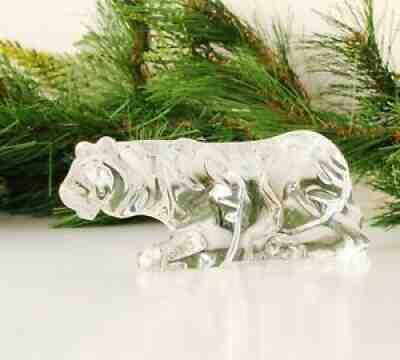
Sold on eBay Feb 07, 2022
Crouching Tiger Baccarat Crystal Signed
Baccarat Crystal Crouching Tiger. The Crouching Tiger Is Made Of Fine French Crystal. Baccarat Has Been Creating Fine Crystal Since 1816. This Crystal Tiger Was Created In Baccarat, France.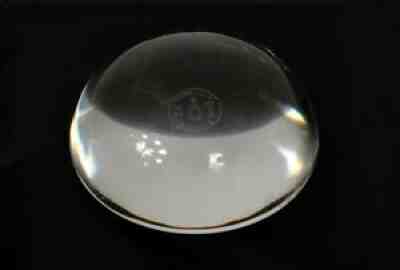
Sold on eBay Oct 13, 2021
Paperweight baccarat sulfide crystal magnifier France twentieth century
Après la Révolution Française, l'entreprise périclita jusque sa faillite en 1806, date à laquelle elle fut vendue aux enchères à un négociant de Verdun. En 1816, la Verrerie fut rachetée par un industriel, Aimé-Gabriel d'Artigues (1773-1848).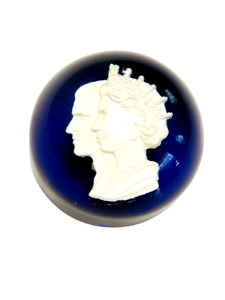
Sold on eBay November 19th, 2023