

Baccarat Collectibles : Baccarat Louis Price List
average value
-
low
-high
-Found 20 out of 35,154 items matching 'louis'
Sold on eBay March 3rd, 2024
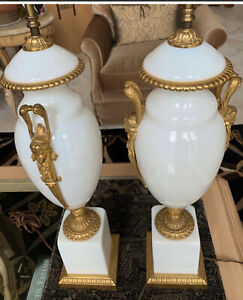
PAIR VINTAGE HOLLYWOOD REGENCY FRENCH OPALINE OPALESCENT GLASS LAMPS GILT BRONZE
PAIR VINTAGE HOLLYWOOD REGENCY FRENCH OPALINE OPALESCENT GLASS LAMPS GILT BRONZEPr Vintage Hollywood Regency French Opaline Opalescent Glass Lamps W Gilt Bronze Ormolu Baccarat StyleFantastic pair of Hollywood Regency 1940-1950 era lamps in a white French opaline opalescent glass with gilt bronze mounts. They are in wonderful vintage condition and the double sockets work perfectlyAn absolutely stunning pair of vintage high quality French Opaline table lamps, with heavy thick white opaline glass and gold gilt (Dore) Ormolu Bronze mounts.The large cast gilt bronze Masks on either sides of each lamp is amazingHeavy lamps both marked Made in France stamped on the bottom inside of the foot.The lamps are heavy and large measuring about 20 to top of Glass (from the bronze base to top of gilt bronze cap) and about 7 " at their widest with the handles.total height is 31" to Finial.This Grecian, Neoclassical lamps are in excellent vintage condition without chips or cracks. The gilded bronze is in perfect condition as well.It will be very well packed and shipped with insurance Thank you for looking and good luck Opaline glass is also a decorative style of glassmade in France from 1800 to the 1890s, though it reached its peak of popularity during the reign of Napoleon III in the 1850s and 1860s. The glass is opaque or slightly translucent, and can appear either white or brightly colored in shades of green, blue, pink, black, lavender and yellow. The glass has a high lead content which defined it as "demi-crystal" or semi-crystal. The primary influences on this style of glass were 16th century Venetian milk glass, and English white glass produced in 18th-century Bristol.Many different pieces were produced in opaline glass, including vases, bowls, cups, coupes, decanters, perfume bottles, boxes, clocks and other implements. The popularity of Opaline glass began during the reign of Napoleon. Cities involved in the production included Le Creusot, Baccarat, and Saint-Louis, Réunion, as well as various locations in England.All opaline glass is hand-blown and has a rough or polished pontil on the bottom. There are no seams and no machine engraving. Many pieces of opaline glass are decorated with gilding. Some with handpainted flowers or birds. Several have bronze ormolu mounts, rims, hinges or holders. Real opaline glass was produced only in France. In the 20th century Italy produced a similar glass and called it opaline veritable.Most opaline glass is not branded or signed.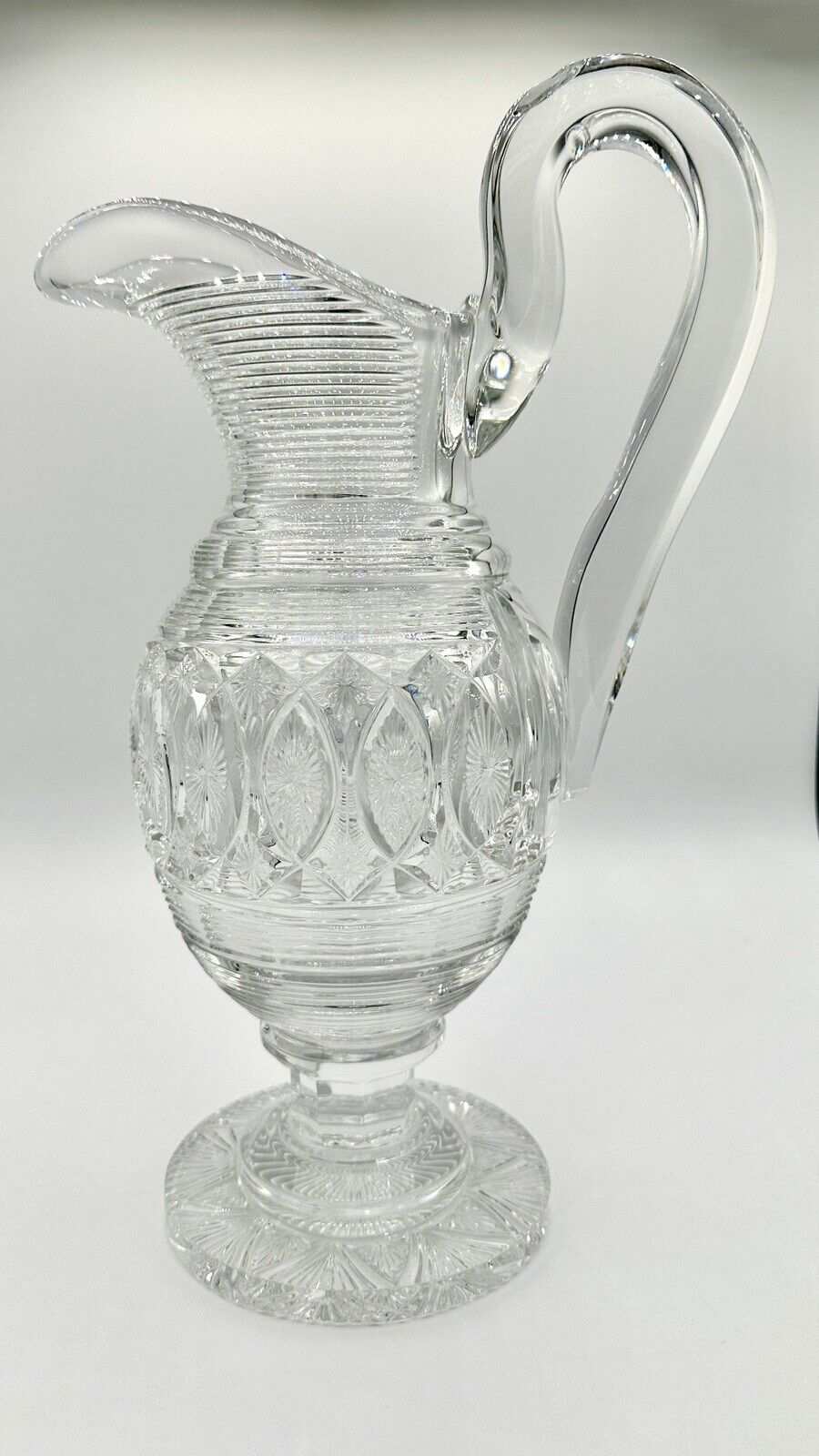
Sold on eBay March 20th, 2025
Baccarat Crystal Charles X Limited Numbered Edition Haute Couture Pitcher
From the world famous company Baccarat Crystal comes this exceptional work of art. The ‘Charles X Ewer’ (also known as the Dauphine, Louise De Boubon). Number 95 of a very limited edition release of only 100 in the world. This pitcher was the premier design of the Memoire Recontres reproduction collection that showcased 23 of Baccarat's most extraordinary designs and the skill of their award winning crattsman.The piece was created using the same blueprints, molds AND tools from the 1820's that were used to create the original!THIS PIECE WAS THE OLDEST DESIGN TO BE INCLUDED IN THIS SPECIAL PRODUCTION AND MOSTSURPRISING, AS THERE WAS ONLY ONE PIECE EVER CREATED BEFORE THIS .....ONLY FOR THE KING OF FRANCE.For this exceptional crystal piece, each step, from start to finish, is executed by one of Baccarat's 20"Meilleurs Ouvrier de France" (finest craftsman in France).Only Baccarat's most complex and costly pieces can boast this merit.THE MEMOIRE HAS RECENTLY BEEN RELAUNCHED AS THE "HAUTE COUTURE" COLLECTION, AND FEATURES NEW LIMITED EDITION REPRODUCTIONS (WITH SOME PIECES AT $200,000+), AND CAN BE SEEN AT BACCARAT'S WORLDWIDE SITE.The Charles X Pitcher is the most iconic Baccarat crystal object ever created by the legendary company. It is prominently featured, front and center, in the Baccarat Museum in France to this day and is considered one of its most important designs ever created by Baccarat.THIS PIECE IS FEATURED IN THE BACCARAT 250TH ANNIVERSARYBOOK (PAGES 30 & 31),AS WELL AS BACCARAT by JEAN LOUIS CURTIS (PAGE 160). The piece has never been used, only displayed safely inside a case. It is in ABSOLUTE MINT CONDITION. No scratches, chips, cracks, or clouding. I am the original owner of this work of art. I paid over $15,000 for it. This is a rare opportunity to add this piece to your collection! Shipped fully insured with UPS. (Condition: New (Other))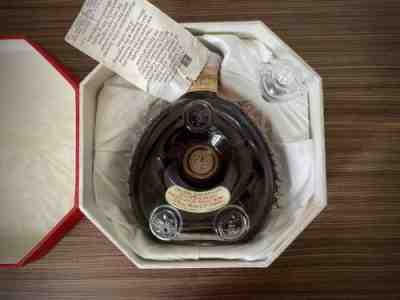
Sold on eBay Apr 2, 2023
FINE Remy Martin Louis xiii Baccarat Full Bottle 750cc
Find many great new & used options and get the best deals for FINE Remy Martin Louis xiii Baccarat Full Bottle 750cc at the best online prices at eBay! Free shipping for many products!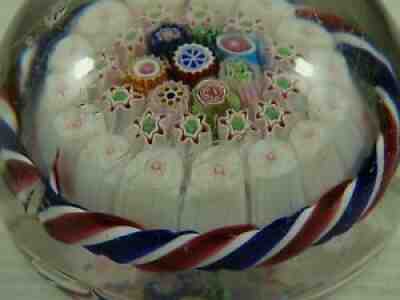
Sold on eBay Jul 16, 2021
FINE QUALITY EARLY PAPERWEIGHT ST LOUIS CLICHY BACCARAT INTEREST VERY RARE L@@K
This is one of the the finer quality older paperweights you are likely to find, im sure it must be by one of the better makers. photos dont do it any justice. surely a very rare and valuable example.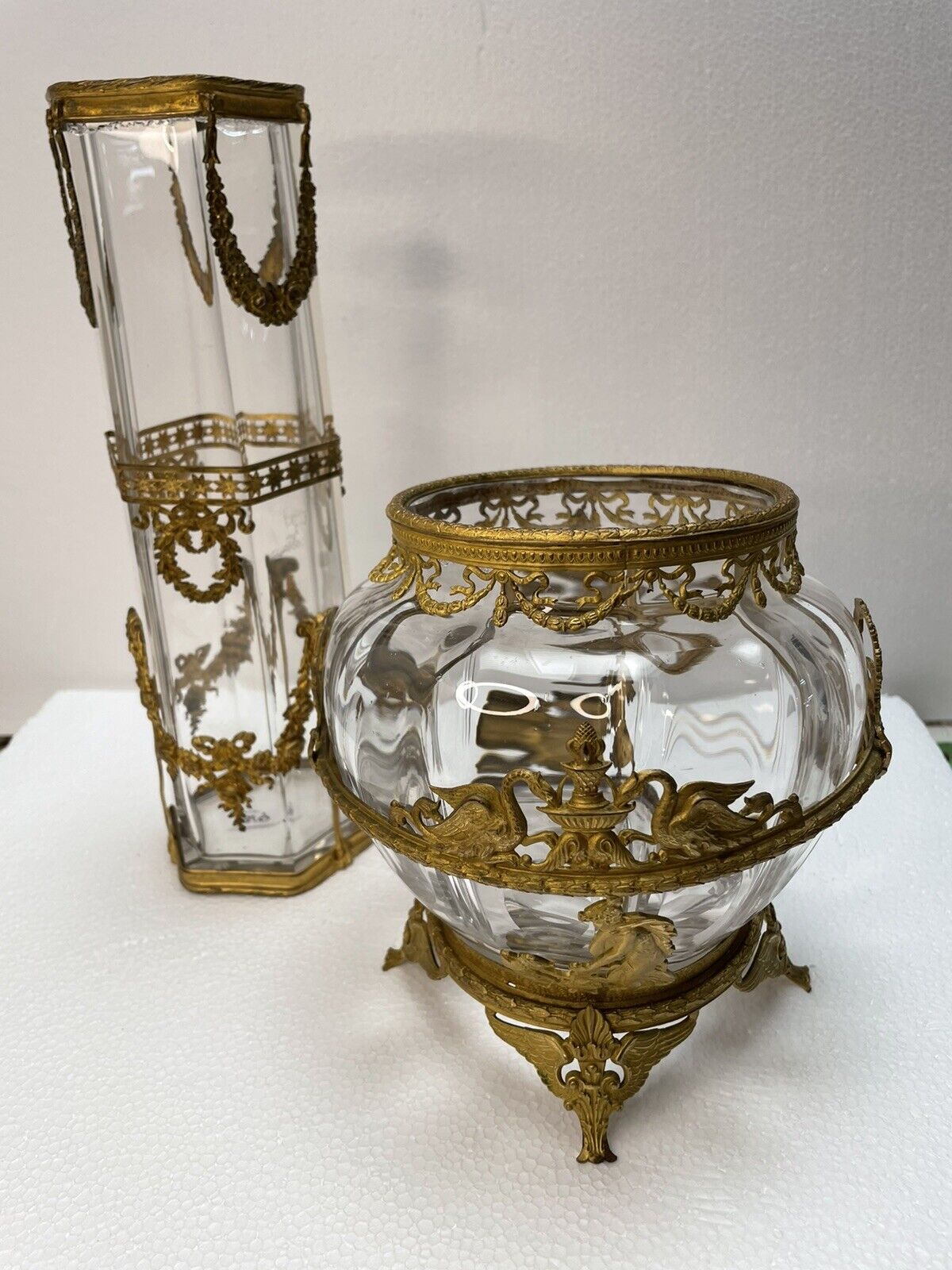
Sold on eBay November 13th, 2024
TWO MAGNIFICENT BACCARAT CRYSTAL AND DORE BRONZE VASES #319
TWO MAGNIFICENT BACCARAT CRYSTAL AND DORE BRONZE VASES BACCARAT WAS KNOWN BEFORE AND AROUND THE TURN OF THE CENTURY FOR THEIR AMAZING CRYSTAL AND DORE BRONZE PIECES. HERE ARE TWO BEING SOLD TOGETHER WITH BEAUTIFUL AND INTRIQUE BRONZE WORK. #1 TALL VASE BACCARAT CRYSTAL IS CLEAN BRONZE WORK GREAT. FROM THE TOP YOU HAVE A DORE BRONZE BAND THAT LEAD TO THREE VERY DETAILED ROSE GARLANDS, MOVING DOWN YOU COME TO A DECORATIVE BAND OF SIMPLE FLOWERS TO A WREATH WITH A BOW THAT IS TIED LIKE A HEARD MOVING DOWN YOU ARRIVE AT A MAGNIFICENT MASK WITH A SUBSTANTIAL BRONZE GARLAND WITH DETAILED AND FLORAL BOUQUETS. IT FINISHES WITH A DORE BRONZE BAND FOR THE CRYSTAL TO SIT IN. #2 ROUND VASE BACCARAT CRYSTAL IS CLEAN BRONZE WORK GREAT.. FROM THE TOP YOU HAVE A CAP OF TASSELS GARLANDS AND RIBBON AMAZING DETAIL MOVING DOWN WINGED ANGELS HOLD UP A BAND THAT RUNS AROUND THE MIDDLE OF THE VASE AND HIGHLIGHTING TWO SWANS DRINKING OUT OF AN ELABORATE FOUNTAIN. THE BOTTOM SHOWS A ROYAL PERSON ACCEPTING A FLAME ON ONE SIDE AND A SHAFT OF WHEAT ON THE OTHER. THE BOTTOM IS ELABORATE WINGED AND SHELL MOTIF ENDING IN A BEAUTIFUL FOOT, SOME OF THE MOST BEAUTIFUL BRONZE WORK I HAVE SEEN. Dimensions: ROUND VASE: HEIGHT: 7 " WIDTH: 7 " TALL VASE: HEIGHT: 11" WIDTH: 3 1/4 "This history of Baccarat spans two hundred years, numerous wars, and unsurpassed advancement in crystal design and manufacturing. Baccarat is a small French town of 600 situated 250 miles east of Paris. In 1764, slightly prior to the French Revolution, Monseigneur de Montmorency Laval the Bishop of Metz, petitioned King Louis XV to allow him to open a glassworks factory on the banks of the River Meurthe. The reason for the Bishop’s interest in opening a glassworks factory was that he owned thousands of acres of old growth forests. In order to turn a profit on the deforestation of his land, the Bishop needed to find some industry that would consume lots of firewood. In 1765, the Compagnie des Cristalleries de Baccarat was established. The Bishop employed the influence of the church to locate an investor to build the factory. His next move was to find an architect and technician to run the factory. A man named Antoine Renaut was hired to oversee the building and running of the Baccarat factory. Baccarat flourished in the coming decades. By the beginnings of the French Revolution, the company employed a work force of 400 people. It must be noted that Baccarat was opened during the age of reason and enlightenment. The managers at Baccarat decided to employee many of the social concepts concerning individual rights and human dignity that arose from the new social philosophies of the period. A small utopian community was built at the Baccarat factory that housed over 70 families. Although Baccarat was ahead of their time in concerning themselves with the welfare of their employees, their motives were not entirely altruistic. The firing of glass at the time was still an imperfect art and was influenced by many factors, including the weather. It was important to have Baccarat’s master craftsmen very close to the factory in order to produce the best possible product. During this time, the company mainly produced bottles, mirrors, and windows panes. Baccarat met a formidable challenge at the beginning of the French Revolution. Economic instability was common in France at this time, however, the situation worsened as the country collapsed into civil war. France’s economic situation continued to worsen with the Napoleonic wars that swept across Europe during the early 19th century. By 1816, inflation caused the company to operate at a loss and the work force was reduced to less than 70 people. During that same year, the factory was sold to a Belgian expert in the production of glass. The purchaser, Monsieur d’Artigues bought the company with 2,845 ounces of solid gold. Monsieur d’Artigues was an ambitious man who set his sites on making Baccarat one of the most prestigious names in glass in Europe and the world. In 1838, a manager at Baccarat discovered a way to produce full-lead crystal that could be colored. The formula was one of the company’s most closely guarded trade secrets. However, the information was leaked to the Bohemians living in the area who produced similar works to those of Baccarat. There was no competition between Baccarat and the Bohemians however, as the Bohemian interest was purely artistic and they philosophically were not interested in making a profit. The factory continued to grow in prestige throughout the remainder of the 19th century. By the end of the 19th century, Baccarat had earned the reputation of being the “Crystal of Kings.” This title is one that the company bears to this day. Baccarat’s stemware and objects d’art adorned the tables of the late Czar and Czarina of Russia, the Emperor of Japan, the late Sultan of Turkey, the King of Siam, Presidents Theodore Roosevelt and Franklin Delano Roosevelt, the last three kings of France – Louis XVIII, Charles X, and Louis Philippe, all the Presidents of the French Republic, the Late Aga Kahn, Pope Benedict XV, President of the Republic of Chile, the former king of Portugal, the late king of Spain, the King of Greece, Emperor Haile Selassie of Ethiopia, the late Wilhelm II of Germany, the US State Departments’ many legations and European Embassies, all of the Maharajahs of India, and King Ibn of Saudia Arabia. For display pieces for the famous Paris Exhibition of 1889 (the same exhibition during which the Eiffel Tower was built), Baccarat created two of its most popular pattern Harcourt and Gascogne. Today, Harcourt is one of the Pope’s stemware patterns at the Vatican. (Condition: Pre-Owned)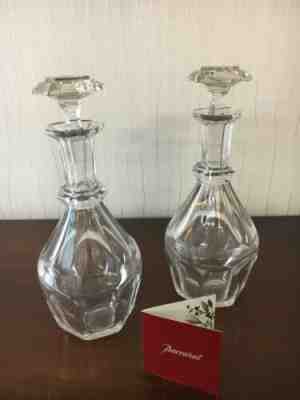
Sold on eBay Nov 19, 2022
4 harcourt baccarat decanters and 1 saint louis tommy red (lot price)
Envoi soigné et protégé.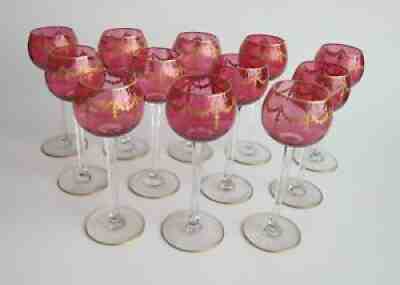
Sold on eBay Dec 08, 2021
Vintage Ruby Red Crystal Wine Goblets St Louis Baccarat ? x 12
Up for your consideration a lot of 12 early French wine goblets. are in perfect condition showing no wear and the goblets in general seem to have never.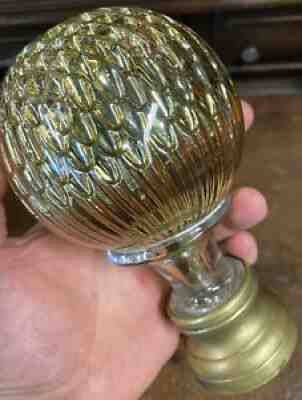
Sold on eBay Sep 01, 2021
Boule d escalier saint st louis baccarat crystal glass golden bee nest d anc
Retrouvez nous sur insta !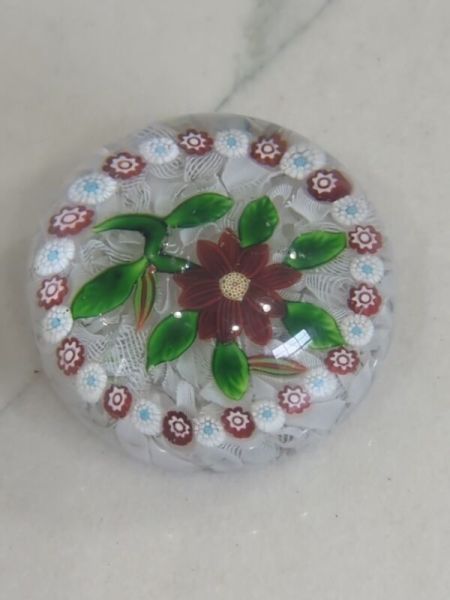
Sold on eBay October 7th, 2024
Vtg Baccarat? St. Louis? Crystal Bouquet Millefiori Garland Paperweight barker?
Not sure who the maker is of this paperweight. It is not signed and there are no stickers on it. Couldn't find any markings. I did see some surface wear scratches. Please see photos and ask questions (Condition: Pre-Owned)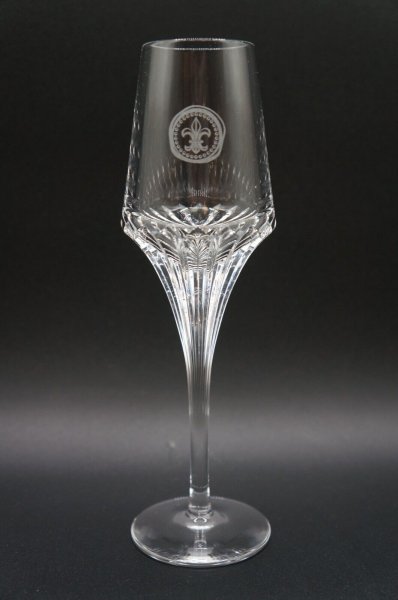
Sold on eBay April 3rd, 2025
Martin LOUIS XIII Glasses 2cl Cognac Baccarat Crystal Glass Set of 4 NIB
Martin LOUIS XIII Glasses 2cl Cognac Baccarat Crystal Glass Set of 4 NIBDim: H7 1/2 D-1 5/8Condition Like New
Sold on eBay May 23rd, 2024
BACCARAT 12 DESSERT OR SALAD PLATES "PARIS" PATTERN CLEAR #419
BACCARAT DESSERT OR SALAD PLATES PARIS PATTERN CLEAR Antique and truly beautiful set of 12 Baccarat crystal plates. Very contemporary and never used. No a knife mark on them. Would be great with a creative dessert or salad or as them used for hors d'oeuvre Not often do you find a set in this condition. Would be a great gift or something for special evening events.HEIGHT: 1/2 " WIDTH: 6 1/2" BACCARATThis history of Baccarat spans two hundred years, numerous wars, and unsurpassed advancement in crystal design and manufacturing. Baccarat is a small French town of 600 situated 250 miles east of Paris. In 1764, slightly prior to the French Revolution, Monseigneur de Montmorency Laval the Bishop of Metz, petitioned King Louis XV to allow him to open a glassworks factory on the banks of the River Meurthe. The reason for the Bishop’s interest in opening a glassworks factory was that he owned thousands of acres of old growth forests. In order to turn a profit on the deforestation of his land, the Bishop needed to find some industry that would consume lots of firewood. In 1765, the Compagnie des Cristalleries de Baccarat was established. The Bishop employed the influence of the church to locate an investor to build the factory. His next move was to find an architect and technician to run the factory. A man named Antoine Renaut was hired to oversee the building and running of the Baccarat factory. Baccarat flourished in the coming decades. By the beginnings of the French Revolution, the company employed a workforce of 400 people. It must be noted that Baccarat was opened during the age of reason and enlightenment. The managers at Baccarat decided to employee many of the social concepts concerning individual rights and human dignity that arose from the new social philosophies of the period. A small utopian community was built at the Baccarat factory that housed over 70 families. Although Baccarat was ahead of their time in concerning themselves with the welfare of their employees, their motives were not entirely altruistic. The firing of glass at the time was still an imperfect art and was influenced by many factors, including the weather. It was important to have Baccarat’s master craftsmen very close to the factory in order to produce the best possible product. During this time, the company mainly produced bottles, mirrors, and windows panes. Baccarat met a formidable challenge at the beginning of the French Revolution. Economic instability was common in France at this time, however, the situation worsened as the country collapsed into civil war. France’s economic situation continued to worsen with the Napoleonic wars that swept across Europe during the early 19th century. By 1816, inflation caused the company to operate at a loss and the workforce was reduced to less than 70 people. During that same year, the factory was sold to a Belgian expert in the production of glass. The purchaser, Monsieur d’Artigues bought the company with 2,845 ounces of solid gold. Monsieur d’Artigues was an ambitious man who set his sites on making Baccarat one of the most prestigious names in glass in Europe and the world. In 1838, a manager at Baccarat discovered a way to produce full-lead crystal that could be colored. The formula was one of the company’s most closely guarded trade secrets. However, the information was leaked to the Bohemians living in the area who produced similar works to those of Baccarat. There was no competition between Baccarat and the Bohemians, however, as the Bohemian interest was purely artistic and they philosophically were not interested in making a profit. The factory continued to grow in prestige throughout the remainder of the 19th century. By the end of the 19th century, Baccarat had earned the reputation of being the “Crystal of Kings.” This title is one that the company bears to this day. Baccarat’s stemware and objects d’art adorned the tables of the late Czar and Czarina of Russia, the Emperor of Japan, the late Sultan of Turkey, the King of Siam, Presidents Theodore Roosevelt and Franklin Delano Roosevelt, the last three kings of France – Louis XVIII, Charles X, and Louis Philippe, all the Presidents of the French Republic, the Late Aga Kahn, Pope Benedict XV, President of the Republic of Chile, the former king of Portugal, the late king of Spain, the King of Greece, Emperor Haile Selassie of Ethiopia, the late Wilhelm II of Germany, the US State Departments’ many legations and European Embassies, all of the Maharajahs of India, and King Ibn of Saudia Arabia. For display pieces for the famous Paris Exhibition of 1889 (the same exhibition during which the Eiffel Tower was built), Baccarat created two of its most popular pattern Harcourt and Gascogne. Today, Harcourt is one of the Pope’s stemware patterns at the Vatican. (Condition: Pre-Owned)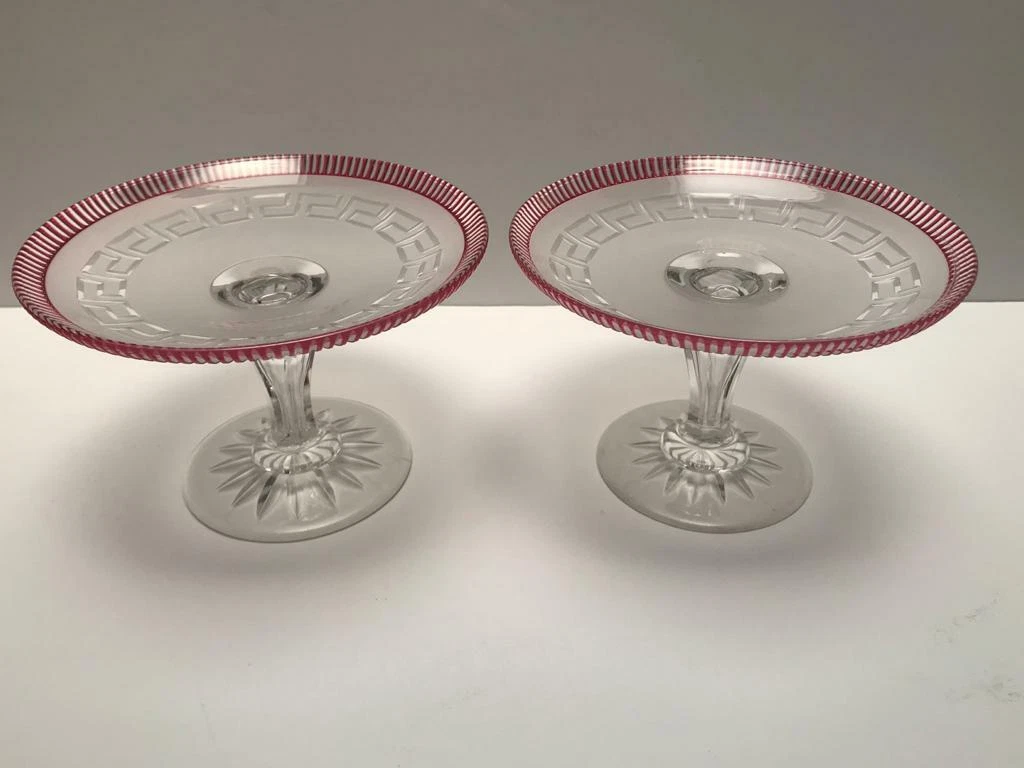
Sold on eBay May 11th, 2025
BACCARAT CRYSTAL RED CUT TO CLEAR TAZZA WITH ACID FROSTED DETAILS RARE
BACCARAT CRYSTAL RED CUT TO CLEAR TAZZA WITH ACID FROSTED DETAILS VERY RAREAntique magnificent and unusual pair of BACCARAT COMPOTIERS. They have a beautiful simple red cut to clear border and surround a acid frosted center with a greek key design into it. The stem is hand blown with a bubble and a acid frosted base with a clear cut star. Made around the turn of the century 1900 and of course not signed. Pieces pre 1940 utilized paper stickers which were removed due to cleaning. The compotier is 5" tall 6 1/2" round. BACCARATThis history of Baccarat spans two hundred years, numerous wars, and unsurpassed advancement in crystal design and manufacturing. Baccarat is a small French town of 600 situated 250 miles east of Paris. In 1764, slightly prior to the French Revolution, Monseigneur de Montmorency-Laval, the Bishop of Metz, petitioned King Louis XV to allow him to open a glassworks factory on the banks of the River Meurthe. The reason for the Bishop's interest in opening a glassworks factory was that he owned thousands of acres of old growth forests. In order to turn a profit on the deforestation of his land, the Bishop needed to find some industry that would consume lots of firewood. In 1765, the Compagnie des Cristalleries de Baccarat was established. The Bishop employed the influence of the church to locate an investor to build the factory. His next move was to find an architect and technician to run the factory. A man named Antoine Renaut was hired to oversee the building and running of the Baccarat factory. Baccarat flourished in the coming decades. By the beginnings of the French Revolution, the company employed a workforce of 400 people. It must be noted that Baccarat was opened during the age of reason and enlightenment. The managers at Baccarat decided to employee many of the social concepts concerning individual rights and human dignity that arose from the new social philosophies of the period. A small utopian community was built at the Baccarat factory that housed over 70 families. Although Baccarat was ahead of their time in concerning themselves with the welfare of their employees, their motives were not entirely altruistic. The firing of glass at the time was still an imperfect art and was influenced by many factors, including the weather. It was important to have Baccarat's master craftsmen very close to the factory in order to produce the best possible product. During this time, the company mainly produced bottles, mirrors, and windows panes. Baccarat met a formidable challenge at the beginning of the French Revolution. Economic instability was common in France at this time, however, the situation worsened as the country collapsed into civil war. France's economic situation continued to worsen with the Napoleonic wars that swept across Europe during the early 19th century. By 1816, inflation caused the company to operate at a loss and the workforce was reduced to less than 70 people. During that same year, the factory was sold to a Belgian expert in the production of glass. The purchaser, Monsieur d'Artigues bought the company with 2,845 ounces of solid gold. Monsieur d'Artigues was an ambitious man who set his sites on making Baccarat one of the most prestigious names in glass in Europe and the world. In 1838, a manager at Baccarat discovered a way to produce full-lead crystal that could be colored. The formula was one of the company's most closely guarded trade secrets. However, the information was leaked to the Bohemians living in the area who produced similar works to those of Baccarat. There was no competition between Baccarat and the Bohemians, however, as the Bohemian interest was purely artistic and they philosophically were not interested in making a profit. The factory continued to grow in prestige throughout the remainder of the 19th century. By the end of the 19th century, Baccarat had earned the reputation of being the "Crystal of Kings." This title is one that the company bears to this day. Baccarat's stemware and objects d'art adorned the tables of the late Czar and Czarina of Russia, the Emperor of Japan, the late Sultan of Turkey, the King of Siam, Presidents Theodore Roosevelt and Franklin Delano Roosevelt, the last three kings of France - Louis XVIII, Charles X, and Louis Philippe, all the Presidents of the French Republic, the Late Aga Kahn, Pope Benedict XV, President of the Republic of Chile, the former king of Portugal, the late king of Spain, the King of Greece, Emperor Haile Selassie of Ethiopia, the late Wilhelm II of Germany, the US State Departments' many legations and European Embassies, all of the Maharajahs of India, and King Ibn of Saudia Arabia. For display pieces for the famous Paris Exhibition of 1889 (the same exhibition during which the Eiffel Tower was built), Baccarat created two of its most popular pattern Harcourt and Gascogne. Today, Harcourt is one of the Pope's stemware patterns at the Vatican. (Condition: Pre-Owned)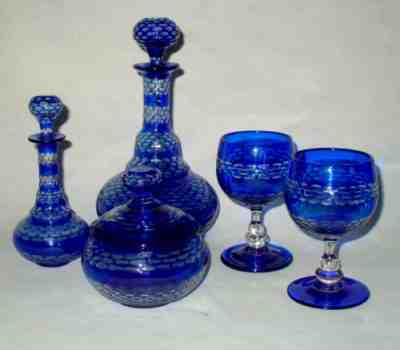
Sold on eBay Jun 17, 2022
Overlay Crystal Night Service Cobalt Decanter Glass Goblet St Louis Baccarat
A water carafe. A lemon balm carafe. Crystal overlay in cobalt blue color. Cut glassware decorated with pastilles. Artist: Saint Louis Period: 19th century Style: Napoleon III Condition: Very good condition Material: Crystal.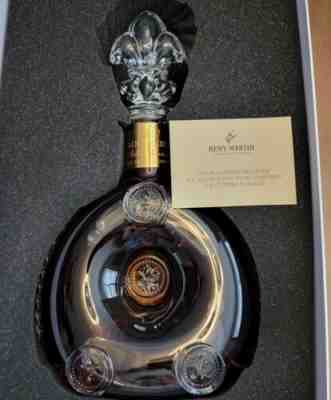
Sold on eBay Jun 17, 2022
REMY MARTIN LOUIS XIII Baccarat Crystal Dummy Decanter Bottle Magnum 1.75L
This is for display only. New in box Magnum size 1.75 L.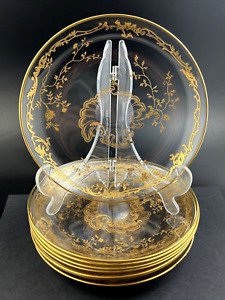
Sold on eBay November 10th, 2023
Set of 8 Baccarat France LOUIS XV Pattern Gold Encrusted 7 1/2" Plates c. 1903
eBay Offering a set of eight spectacular antique Baccarat 7 1/2" dessert plates with gold encrusted "Louis XV" pattern. The earliest catalog I've found with this pattern is Baccarat's 1903 catalog. Very rare. Excellent condition, no chips, cracks or repairs. All plates have a finely polished pontil on the base. Some scratches from use and very light wear to the gold overlay. Please see photographs as they are part of the description Andrews Vintage : Take a moment to review our other wonderful estate finds. We do combine shipping on multiple purchases when feasible to combine for safe shipping. If you wish to combine the shipping for multiple purchases from our store, please send a message requesting combined shipping and wait for an updated invoice prior to paying. The shipping calculator is often incorrect, if you feel the shipping charge is excessive, please send us a message and we will give you an accurate shipping quote.Visit Our eBay Store: Andrews Vintage (Condition: Pre-Owned)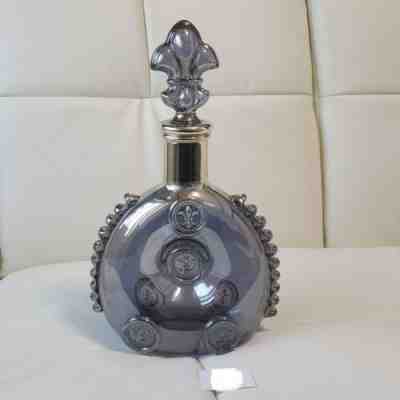
Sold on eBay Jun 25, 2022
Louis Xiii Remy Martin Baccarat Empty Bottle Black Pearl Decoration Custom 700ml
Remy Martin Louis XIII Black Pearl Specifications Baccarat Bottle 700ml Empty Decorative Bottle. The red box Louis XIII transparent Baccarat bottle was specially created in black pearl. For display purposes only.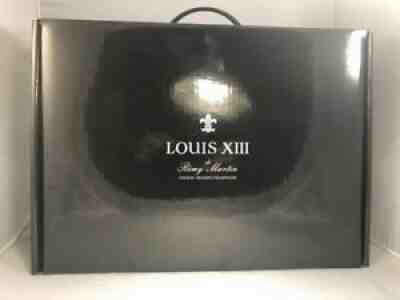
Sold on eBay Jun 25, 2021
Remy Martin Louis XIII Cognac Christophe Pillet Crystal Perfect Pour Jigger Tray
Ultimate Remy Martin Louis XIII Cognac Christophe Pillet Crystal Perfect Pour Set. Glasses, Jigger and Tray. Very rare in the box for on-site sales in restaurants and bars. Tray has one small dimple in it.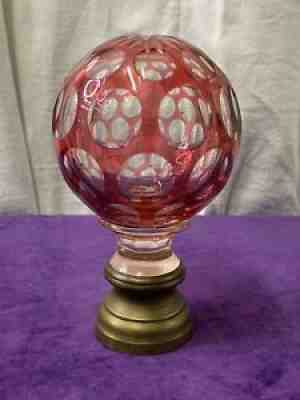
Sold on eBay Aug 22, 2021
Beautiful old and stair ball color crystal st. louis or baccarat 1900
BELLE ET ANCIENNE BOULE Dâ??ESCALIER CRISTAL COULEUR ROUGE Ã? FACETTES MONTURE LAITON. CRISTALLERIE DE SAINT LOUIS OU BACCARAT 1900. EN BON Ã?TAT GÃ?NÃ?RAL. HAUTEUR : 18 cmDIAMÃ?TRE : 10 cmME CONTACTER POUR LES FRAIS DE LIVRAISON HORS EUROPE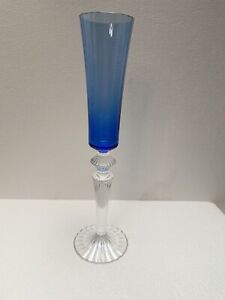
Sold on eBay October 7th, 2023
BACCARAT "MILLE NUITS' AQUA AND CLEAR SET OF 3 GLASSES #394
BACCARAT "MILLE NUITS' AQUA AND CLEAR GLASS SET OF 3 Magnificent set of Baccarat MILLE NUIT champagne glasses in aqua and clear crystal. The base of the glass is heavily cut and sparkles as it goes up the stem to a large jewel that all parts are cut. The bowl is a beautiful shade of aqua and has an optic effect that catches the light. The entire glass on a table shimmers and very elegant. This is a must for those who entertain or possibly an upcoming wedding gift. Dimensions: HEIGHT: 11 1/2 inches Width: 3 history of Baccarat spans two hundred years, numerous wars, and unsurpassed advancement in crystal design and manufacturing. Baccarat is a small French town of 600 situated 250 miles east of Paris. In 1764, slightly prior to the French Revolution, Monseigneur de Montmorency Laval the Bishop of Metz, petitioned King Louis XV to allow him to open a glassworks factory on the banks of the River Meurthe. The reason for the Bishop’s interest in opening a glassworks factory was that he owned thousands of acres of old growth forests. In order to turn a profit on the deforestation of his land, the Bishop needed to find some industry that would consume lots of firewood. In 1765, the Compagnie des Cristalleries de Baccarat was established. The Bishop employed the influence of the church to locate an investor to build the factory. His next move was to find an architect and technician to run the factory. A man named Antoine Renaut was hired to oversee the building and running of the Baccarat factory. Baccarat flourished in the coming decades. By the beginnings of the French Revolution, the company employed a workforce of 400 people. It must be noted that Baccarat was opened during the age of reason and enlightenment. The managers at Baccarat decided to employee many of the social concepts concerning individual rights and human dignity that arose from the new social philosophies of the period. A small utopian community was built at the Baccarat factory that housed over 70 families. Although Baccarat was ahead of their time in concerning themselves with the welfare of their employees, their motives were not entirely altruistic. The firing of glass at the time was still an imperfect art and was influenced by many factors, including the weather. It was important to have Baccarat’s master craftsmen very close to the factory in order to produce the best possible product. During this time, the company mainly produced bottles, mirrors, and windows panes. Baccarat met a formidable challenge at the beginning of the French Revolution. Economic instability was common in France at this time, however, the situation worsened as the country collapsed into civil war. France’s economic situation continued to worsen with the Napoleonic wars that swept across Europe during the early 19th century. By 1816, inflation caused the company to operate at a loss and the workforce was reduced to less than 70 people. During that same year, the factory was sold to a Belgian expert in the production of glass. The purchaser, Monsieur d’Artigues bought the company with 2,845 ounces of solid gold. Monsieur d’Artigues was an ambitious man who set his sites on making Baccarat one of the most prestigious names in glass in Europe and the world. In 1838, a manager at Baccarat discovered a way to produce a full-lead crystal that could be colored. The formula was one of the company’s most closely guarded trade secrets. However, the information was leaked to the Bohemians living in the area who produced similar works to those of Baccarat. There was no competition between Baccarat and the Bohemians, however, as the Bohemian interest was purely artistic and they philosophically were not interested in making a profit. The factory continued to grow in prestige throughout the remainder of the 19th century. By the end of the 19th century, Baccarat had earned the reputation of being the “Crystal of Kings.” This title is one that the company bears to this day. Baccarat’s stemware and objects d’art adorned the tables of the late Czar and Czarina of Russia, the Emperor of Japan, the late Sultan of Turkey, the King of Siam, Presidents Theodore Roosevelt and Franklin Delano Roosevelt, the last three kings of France – Louis XVIII, Charles X, and Louis Philippe, all the Presidents of the French Republic, the Late Aga Kahn, Pope Benedict XV, President of the Republic of Chile, the former king of Portugal, the late king of Spain, the King of Greece, Emperor Haile Selassie of Ethiopia, the late Wilhelm II of Germany, the US State Departments’ many legations and European Embassies, all of the Maharajahs of India, and King Ibn of Saudia Arabia. For display pieces for the famous Paris Exhibition of 1889 (the same exhibition during which the Eiffel Tower was built), Baccarat created two of its most popular pattern Harcourt and Gascogne. Today, Harcourt is one of the Pope’s stemware patterns at the Vatican. (Condition: Pre-Owned)
Sold on eBay June 10th, 2024