

Baccarat Collectibles : Man Price List
average value
-
low
-high
-Found 20 out of 35,154 items matching 'man'
Sold on eBay Jan 27, 2022
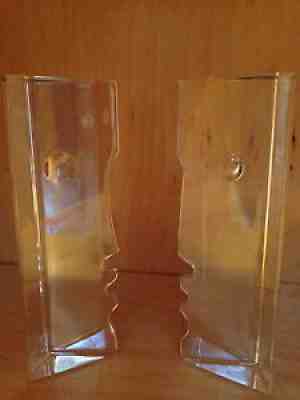
Baccarat France Crystal Sculpture "Encounter, Man and Woman" R. Rigot Fabulous
Pair of Baccarat triangular face sculptures entitled "Encounter Man" and Encounter Woman". Crystal with cut out outline of facial features on one corner and round indentations for eyes. Marked: (acid stamped on bottom) "Baccarat France".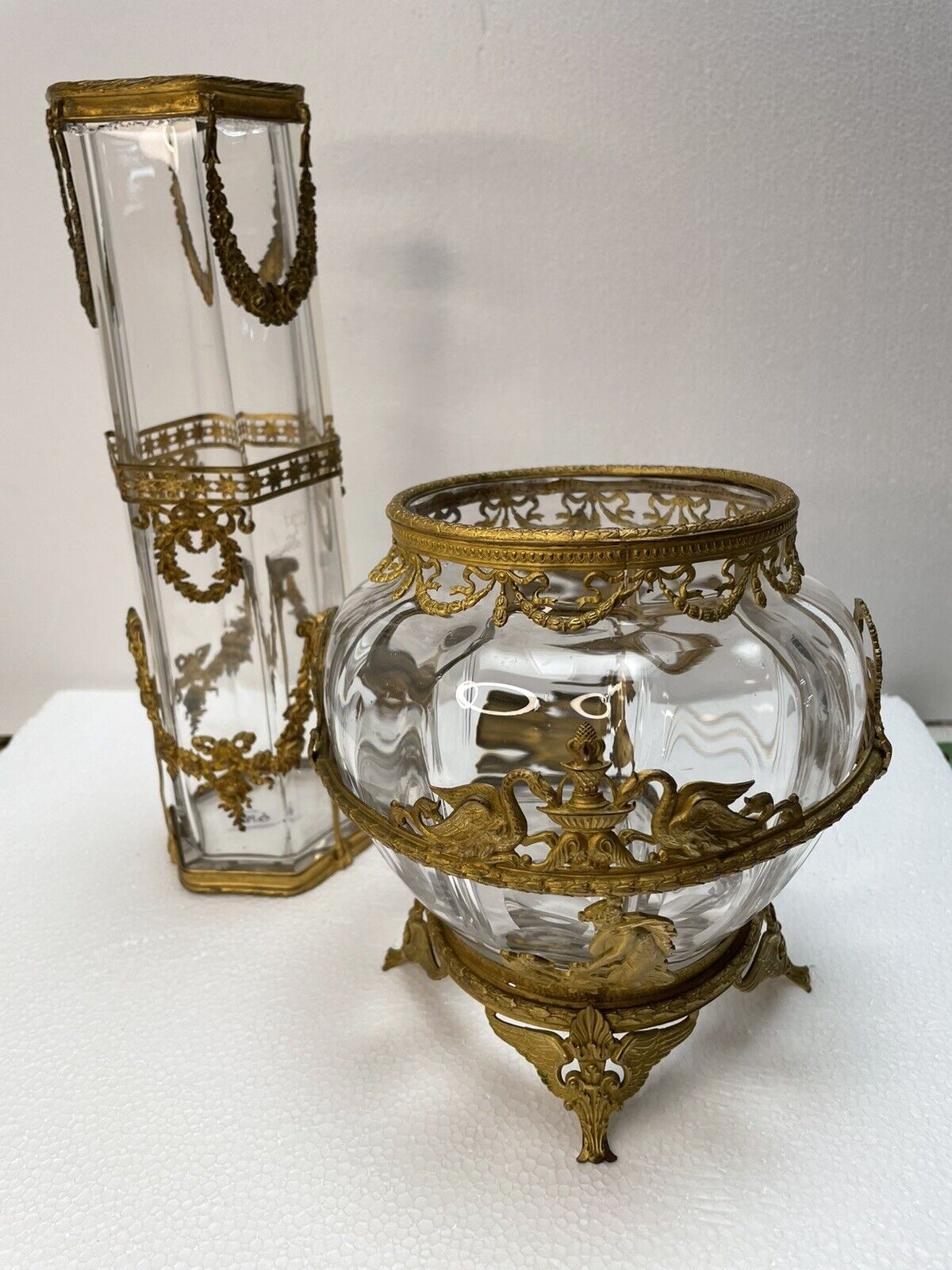
Sold on eBay November 13th, 2024
TWO MAGNIFICENT BACCARAT CRYSTAL AND DORE BRONZE VASES #319
TWO MAGNIFICENT BACCARAT CRYSTAL AND DORE BRONZE VASES BACCARAT WAS KNOWN BEFORE AND AROUND THE TURN OF THE CENTURY FOR THEIR AMAZING CRYSTAL AND DORE BRONZE PIECES. HERE ARE TWO BEING SOLD TOGETHER WITH BEAUTIFUL AND INTRIQUE BRONZE WORK. #1 TALL VASE BACCARAT CRYSTAL IS CLEAN BRONZE WORK GREAT. FROM THE TOP YOU HAVE A DORE BRONZE BAND THAT LEAD TO THREE VERY DETAILED ROSE GARLANDS, MOVING DOWN YOU COME TO A DECORATIVE BAND OF SIMPLE FLOWERS TO A WREATH WITH A BOW THAT IS TIED LIKE A HEARD MOVING DOWN YOU ARRIVE AT A MAGNIFICENT MASK WITH A SUBSTANTIAL BRONZE GARLAND WITH DETAILED AND FLORAL BOUQUETS. IT FINISHES WITH A DORE BRONZE BAND FOR THE CRYSTAL TO SIT IN. #2 ROUND VASE BACCARAT CRYSTAL IS CLEAN BRONZE WORK GREAT.. FROM THE TOP YOU HAVE A CAP OF TASSELS GARLANDS AND RIBBON AMAZING DETAIL MOVING DOWN WINGED ANGELS HOLD UP A BAND THAT RUNS AROUND THE MIDDLE OF THE VASE AND HIGHLIGHTING TWO SWANS DRINKING OUT OF AN ELABORATE FOUNTAIN. THE BOTTOM SHOWS A ROYAL PERSON ACCEPTING A FLAME ON ONE SIDE AND A SHAFT OF WHEAT ON THE OTHER. THE BOTTOM IS ELABORATE WINGED AND SHELL MOTIF ENDING IN A BEAUTIFUL FOOT, SOME OF THE MOST BEAUTIFUL BRONZE WORK I HAVE SEEN. Dimensions: ROUND VASE: HEIGHT: 7 " WIDTH: 7 " TALL VASE: HEIGHT: 11" WIDTH: 3 1/4 "This history of Baccarat spans two hundred years, numerous wars, and unsurpassed advancement in crystal design and manufacturing. Baccarat is a small French town of 600 situated 250 miles east of Paris. In 1764, slightly prior to the French Revolution, Monseigneur de Montmorency Laval the Bishop of Metz, petitioned King Louis XV to allow him to open a glassworks factory on the banks of the River Meurthe. The reason for the Bishop’s interest in opening a glassworks factory was that he owned thousands of acres of old growth forests. In order to turn a profit on the deforestation of his land, the Bishop needed to find some industry that would consume lots of firewood. In 1765, the Compagnie des Cristalleries de Baccarat was established. The Bishop employed the influence of the church to locate an investor to build the factory. His next move was to find an architect and technician to run the factory. A man named Antoine Renaut was hired to oversee the building and running of the Baccarat factory. Baccarat flourished in the coming decades. By the beginnings of the French Revolution, the company employed a work force of 400 people. It must be noted that Baccarat was opened during the age of reason and enlightenment. The managers at Baccarat decided to employee many of the social concepts concerning individual rights and human dignity that arose from the new social philosophies of the period. A small utopian community was built at the Baccarat factory that housed over 70 families. Although Baccarat was ahead of their time in concerning themselves with the welfare of their employees, their motives were not entirely altruistic. The firing of glass at the time was still an imperfect art and was influenced by many factors, including the weather. It was important to have Baccarat’s master craftsmen very close to the factory in order to produce the best possible product. During this time, the company mainly produced bottles, mirrors, and windows panes. Baccarat met a formidable challenge at the beginning of the French Revolution. Economic instability was common in France at this time, however, the situation worsened as the country collapsed into civil war. France’s economic situation continued to worsen with the Napoleonic wars that swept across Europe during the early 19th century. By 1816, inflation caused the company to operate at a loss and the work force was reduced to less than 70 people. During that same year, the factory was sold to a Belgian expert in the production of glass. The purchaser, Monsieur d’Artigues bought the company with 2,845 ounces of solid gold. Monsieur d’Artigues was an ambitious man who set his sites on making Baccarat one of the most prestigious names in glass in Europe and the world. In 1838, a manager at Baccarat discovered a way to produce full-lead crystal that could be colored. The formula was one of the company’s most closely guarded trade secrets. However, the information was leaked to the Bohemians living in the area who produced similar works to those of Baccarat. There was no competition between Baccarat and the Bohemians however, as the Bohemian interest was purely artistic and they philosophically were not interested in making a profit. The factory continued to grow in prestige throughout the remainder of the 19th century. By the end of the 19th century, Baccarat had earned the reputation of being the “Crystal of Kings.” This title is one that the company bears to this day. Baccarat’s stemware and objects d’art adorned the tables of the late Czar and Czarina of Russia, the Emperor of Japan, the late Sultan of Turkey, the King of Siam, Presidents Theodore Roosevelt and Franklin Delano Roosevelt, the last three kings of France – Louis XVIII, Charles X, and Louis Philippe, all the Presidents of the French Republic, the Late Aga Kahn, Pope Benedict XV, President of the Republic of Chile, the former king of Portugal, the late king of Spain, the King of Greece, Emperor Haile Selassie of Ethiopia, the late Wilhelm II of Germany, the US State Departments’ many legations and European Embassies, all of the Maharajahs of India, and King Ibn of Saudia Arabia. For display pieces for the famous Paris Exhibition of 1889 (the same exhibition during which the Eiffel Tower was built), Baccarat created two of its most popular pattern Harcourt and Gascogne. Today, Harcourt is one of the Pope’s stemware patterns at the Vatican. (Condition: Pre-Owned)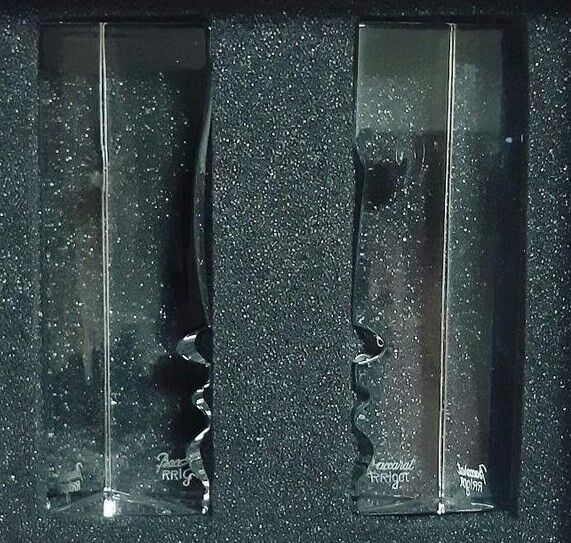
Sold on eBay January 21st, 2025
Baccarat Crystal Abstract " Encounter - Man and Woman" - 2 avail.
For Sale: Two (2) Baccarat sets of Sculptures designed by R. Rigot and named: "ENCOUNTER, MAN AND WOMAN" and "Rigo Homme" (each pair/set sold separately). Exquisite, unbroken damaged condition! These photos do not give them adequate credit; they are in beautiful shape. These figures are in an abstract design and highly desired by crystal collectors! They stand: 5 3/8” tall x 1 3/8" wide on short side x 1 3/4" wide on long side. Each set will be expertly packed in durable boxes and fully insured, w/ delivery signature required. Any questions, please contact me for assistance. A receipt signature of buyer will be required upon delivery. 21 + 3w - 2 @ 4/25 (Condition: New (Other))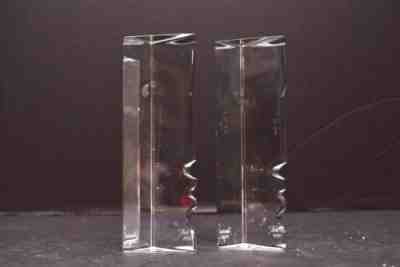
Sold on eBay Jun 26, 2022
ROBERT RIGOT BACCARAT SET Encounter Man & Woman W Box Crystal Figurine Sculpture
The boxes do not have the foam incerts.
Sold on eBay May 23rd, 2024
BACCARAT 12 DESSERT OR SALAD PLATES "PARIS" PATTERN CLEAR #419
BACCARAT DESSERT OR SALAD PLATES PARIS PATTERN CLEAR Antique and truly beautiful set of 12 Baccarat crystal plates. Very contemporary and never used. No a knife mark on them. Would be great with a creative dessert or salad or as them used for hors d'oeuvre Not often do you find a set in this condition. Would be a great gift or something for special evening events.HEIGHT: 1/2 " WIDTH: 6 1/2" BACCARATThis history of Baccarat spans two hundred years, numerous wars, and unsurpassed advancement in crystal design and manufacturing. Baccarat is a small French town of 600 situated 250 miles east of Paris. In 1764, slightly prior to the French Revolution, Monseigneur de Montmorency Laval the Bishop of Metz, petitioned King Louis XV to allow him to open a glassworks factory on the banks of the River Meurthe. The reason for the Bishop’s interest in opening a glassworks factory was that he owned thousands of acres of old growth forests. In order to turn a profit on the deforestation of his land, the Bishop needed to find some industry that would consume lots of firewood. In 1765, the Compagnie des Cristalleries de Baccarat was established. The Bishop employed the influence of the church to locate an investor to build the factory. His next move was to find an architect and technician to run the factory. A man named Antoine Renaut was hired to oversee the building and running of the Baccarat factory. Baccarat flourished in the coming decades. By the beginnings of the French Revolution, the company employed a workforce of 400 people. It must be noted that Baccarat was opened during the age of reason and enlightenment. The managers at Baccarat decided to employee many of the social concepts concerning individual rights and human dignity that arose from the new social philosophies of the period. A small utopian community was built at the Baccarat factory that housed over 70 families. Although Baccarat was ahead of their time in concerning themselves with the welfare of their employees, their motives were not entirely altruistic. The firing of glass at the time was still an imperfect art and was influenced by many factors, including the weather. It was important to have Baccarat’s master craftsmen very close to the factory in order to produce the best possible product. During this time, the company mainly produced bottles, mirrors, and windows panes. Baccarat met a formidable challenge at the beginning of the French Revolution. Economic instability was common in France at this time, however, the situation worsened as the country collapsed into civil war. France’s economic situation continued to worsen with the Napoleonic wars that swept across Europe during the early 19th century. By 1816, inflation caused the company to operate at a loss and the workforce was reduced to less than 70 people. During that same year, the factory was sold to a Belgian expert in the production of glass. The purchaser, Monsieur d’Artigues bought the company with 2,845 ounces of solid gold. Monsieur d’Artigues was an ambitious man who set his sites on making Baccarat one of the most prestigious names in glass in Europe and the world. In 1838, a manager at Baccarat discovered a way to produce full-lead crystal that could be colored. The formula was one of the company’s most closely guarded trade secrets. However, the information was leaked to the Bohemians living in the area who produced similar works to those of Baccarat. There was no competition between Baccarat and the Bohemians, however, as the Bohemian interest was purely artistic and they philosophically were not interested in making a profit. The factory continued to grow in prestige throughout the remainder of the 19th century. By the end of the 19th century, Baccarat had earned the reputation of being the “Crystal of Kings.” This title is one that the company bears to this day. Baccarat’s stemware and objects d’art adorned the tables of the late Czar and Czarina of Russia, the Emperor of Japan, the late Sultan of Turkey, the King of Siam, Presidents Theodore Roosevelt and Franklin Delano Roosevelt, the last three kings of France – Louis XVIII, Charles X, and Louis Philippe, all the Presidents of the French Republic, the Late Aga Kahn, Pope Benedict XV, President of the Republic of Chile, the former king of Portugal, the late king of Spain, the King of Greece, Emperor Haile Selassie of Ethiopia, the late Wilhelm II of Germany, the US State Departments’ many legations and European Embassies, all of the Maharajahs of India, and King Ibn of Saudia Arabia. For display pieces for the famous Paris Exhibition of 1889 (the same exhibition during which the Eiffel Tower was built), Baccarat created two of its most popular pattern Harcourt and Gascogne. Today, Harcourt is one of the Pope’s stemware patterns at the Vatican. (Condition: Pre-Owned)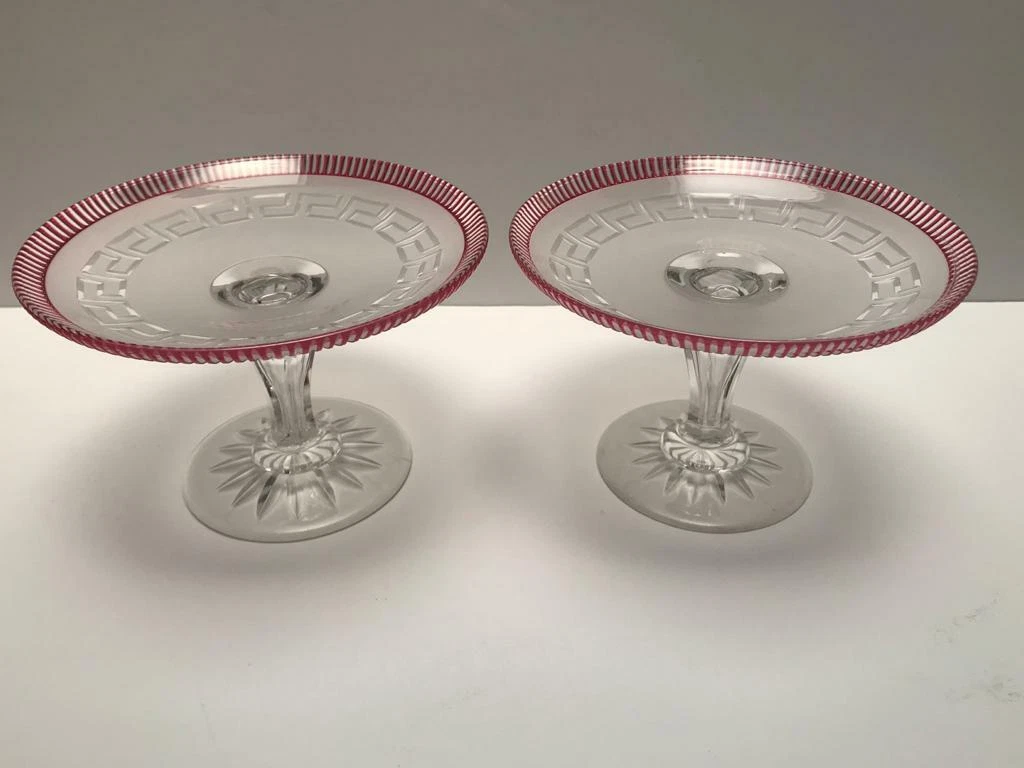
Sold on eBay May 11th, 2025
BACCARAT CRYSTAL RED CUT TO CLEAR TAZZA WITH ACID FROSTED DETAILS RARE
BACCARAT CRYSTAL RED CUT TO CLEAR TAZZA WITH ACID FROSTED DETAILS VERY RAREAntique magnificent and unusual pair of BACCARAT COMPOTIERS. They have a beautiful simple red cut to clear border and surround a acid frosted center with a greek key design into it. The stem is hand blown with a bubble and a acid frosted base with a clear cut star. Made around the turn of the century 1900 and of course not signed. Pieces pre 1940 utilized paper stickers which were removed due to cleaning. The compotier is 5" tall 6 1/2" round. BACCARATThis history of Baccarat spans two hundred years, numerous wars, and unsurpassed advancement in crystal design and manufacturing. Baccarat is a small French town of 600 situated 250 miles east of Paris. In 1764, slightly prior to the French Revolution, Monseigneur de Montmorency-Laval, the Bishop of Metz, petitioned King Louis XV to allow him to open a glassworks factory on the banks of the River Meurthe. The reason for the Bishop's interest in opening a glassworks factory was that he owned thousands of acres of old growth forests. In order to turn a profit on the deforestation of his land, the Bishop needed to find some industry that would consume lots of firewood. In 1765, the Compagnie des Cristalleries de Baccarat was established. The Bishop employed the influence of the church to locate an investor to build the factory. His next move was to find an architect and technician to run the factory. A man named Antoine Renaut was hired to oversee the building and running of the Baccarat factory. Baccarat flourished in the coming decades. By the beginnings of the French Revolution, the company employed a workforce of 400 people. It must be noted that Baccarat was opened during the age of reason and enlightenment. The managers at Baccarat decided to employee many of the social concepts concerning individual rights and human dignity that arose from the new social philosophies of the period. A small utopian community was built at the Baccarat factory that housed over 70 families. Although Baccarat was ahead of their time in concerning themselves with the welfare of their employees, their motives were not entirely altruistic. The firing of glass at the time was still an imperfect art and was influenced by many factors, including the weather. It was important to have Baccarat's master craftsmen very close to the factory in order to produce the best possible product. During this time, the company mainly produced bottles, mirrors, and windows panes. Baccarat met a formidable challenge at the beginning of the French Revolution. Economic instability was common in France at this time, however, the situation worsened as the country collapsed into civil war. France's economic situation continued to worsen with the Napoleonic wars that swept across Europe during the early 19th century. By 1816, inflation caused the company to operate at a loss and the workforce was reduced to less than 70 people. During that same year, the factory was sold to a Belgian expert in the production of glass. The purchaser, Monsieur d'Artigues bought the company with 2,845 ounces of solid gold. Monsieur d'Artigues was an ambitious man who set his sites on making Baccarat one of the most prestigious names in glass in Europe and the world. In 1838, a manager at Baccarat discovered a way to produce full-lead crystal that could be colored. The formula was one of the company's most closely guarded trade secrets. However, the information was leaked to the Bohemians living in the area who produced similar works to those of Baccarat. There was no competition between Baccarat and the Bohemians, however, as the Bohemian interest was purely artistic and they philosophically were not interested in making a profit. The factory continued to grow in prestige throughout the remainder of the 19th century. By the end of the 19th century, Baccarat had earned the reputation of being the "Crystal of Kings." This title is one that the company bears to this day. Baccarat's stemware and objects d'art adorned the tables of the late Czar and Czarina of Russia, the Emperor of Japan, the late Sultan of Turkey, the King of Siam, Presidents Theodore Roosevelt and Franklin Delano Roosevelt, the last three kings of France - Louis XVIII, Charles X, and Louis Philippe, all the Presidents of the French Republic, the Late Aga Kahn, Pope Benedict XV, President of the Republic of Chile, the former king of Portugal, the late king of Spain, the King of Greece, Emperor Haile Selassie of Ethiopia, the late Wilhelm II of Germany, the US State Departments' many legations and European Embassies, all of the Maharajahs of India, and King Ibn of Saudia Arabia. For display pieces for the famous Paris Exhibition of 1889 (the same exhibition during which the Eiffel Tower was built), Baccarat created two of its most popular pattern Harcourt and Gascogne. Today, Harcourt is one of the Pope's stemware patterns at the Vatican. (Condition: Pre-Owned)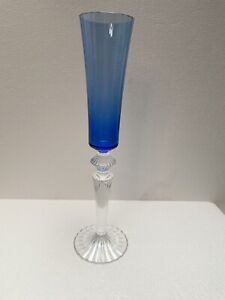
Sold on eBay October 7th, 2023
BACCARAT "MILLE NUITS' AQUA AND CLEAR SET OF 3 GLASSES #394
BACCARAT "MILLE NUITS' AQUA AND CLEAR GLASS SET OF 3 Magnificent set of Baccarat MILLE NUIT champagne glasses in aqua and clear crystal. The base of the glass is heavily cut and sparkles as it goes up the stem to a large jewel that all parts are cut. The bowl is a beautiful shade of aqua and has an optic effect that catches the light. The entire glass on a table shimmers and very elegant. This is a must for those who entertain or possibly an upcoming wedding gift. Dimensions: HEIGHT: 11 1/2 inches Width: 3 history of Baccarat spans two hundred years, numerous wars, and unsurpassed advancement in crystal design and manufacturing. Baccarat is a small French town of 600 situated 250 miles east of Paris. In 1764, slightly prior to the French Revolution, Monseigneur de Montmorency Laval the Bishop of Metz, petitioned King Louis XV to allow him to open a glassworks factory on the banks of the River Meurthe. The reason for the Bishop’s interest in opening a glassworks factory was that he owned thousands of acres of old growth forests. In order to turn a profit on the deforestation of his land, the Bishop needed to find some industry that would consume lots of firewood. In 1765, the Compagnie des Cristalleries de Baccarat was established. The Bishop employed the influence of the church to locate an investor to build the factory. His next move was to find an architect and technician to run the factory. A man named Antoine Renaut was hired to oversee the building and running of the Baccarat factory. Baccarat flourished in the coming decades. By the beginnings of the French Revolution, the company employed a workforce of 400 people. It must be noted that Baccarat was opened during the age of reason and enlightenment. The managers at Baccarat decided to employee many of the social concepts concerning individual rights and human dignity that arose from the new social philosophies of the period. A small utopian community was built at the Baccarat factory that housed over 70 families. Although Baccarat was ahead of their time in concerning themselves with the welfare of their employees, their motives were not entirely altruistic. The firing of glass at the time was still an imperfect art and was influenced by many factors, including the weather. It was important to have Baccarat’s master craftsmen very close to the factory in order to produce the best possible product. During this time, the company mainly produced bottles, mirrors, and windows panes. Baccarat met a formidable challenge at the beginning of the French Revolution. Economic instability was common in France at this time, however, the situation worsened as the country collapsed into civil war. France’s economic situation continued to worsen with the Napoleonic wars that swept across Europe during the early 19th century. By 1816, inflation caused the company to operate at a loss and the workforce was reduced to less than 70 people. During that same year, the factory was sold to a Belgian expert in the production of glass. The purchaser, Monsieur d’Artigues bought the company with 2,845 ounces of solid gold. Monsieur d’Artigues was an ambitious man who set his sites on making Baccarat one of the most prestigious names in glass in Europe and the world. In 1838, a manager at Baccarat discovered a way to produce a full-lead crystal that could be colored. The formula was one of the company’s most closely guarded trade secrets. However, the information was leaked to the Bohemians living in the area who produced similar works to those of Baccarat. There was no competition between Baccarat and the Bohemians, however, as the Bohemian interest was purely artistic and they philosophically were not interested in making a profit. The factory continued to grow in prestige throughout the remainder of the 19th century. By the end of the 19th century, Baccarat had earned the reputation of being the “Crystal of Kings.” This title is one that the company bears to this day. Baccarat’s stemware and objects d’art adorned the tables of the late Czar and Czarina of Russia, the Emperor of Japan, the late Sultan of Turkey, the King of Siam, Presidents Theodore Roosevelt and Franklin Delano Roosevelt, the last three kings of France – Louis XVIII, Charles X, and Louis Philippe, all the Presidents of the French Republic, the Late Aga Kahn, Pope Benedict XV, President of the Republic of Chile, the former king of Portugal, the late king of Spain, the King of Greece, Emperor Haile Selassie of Ethiopia, the late Wilhelm II of Germany, the US State Departments’ many legations and European Embassies, all of the Maharajahs of India, and King Ibn of Saudia Arabia. For display pieces for the famous Paris Exhibition of 1889 (the same exhibition during which the Eiffel Tower was built), Baccarat created two of its most popular pattern Harcourt and Gascogne. Today, Harcourt is one of the Pope’s stemware patterns at the Vatican. (Condition: Pre-Owned)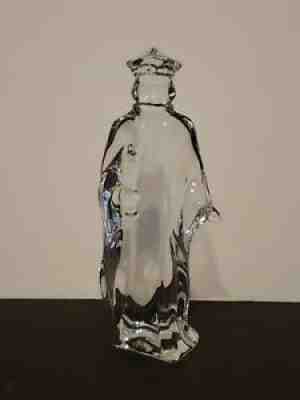
Sold on eBay Nov 20, 2021
BACCARAT MAGI KING RETIRED NATIVITY SCENE WISE MAN GASPAR
One edge of the crown may have a flea bite that you can feel but not see. I do not have the original box. From what I have researched this was a limited edition item.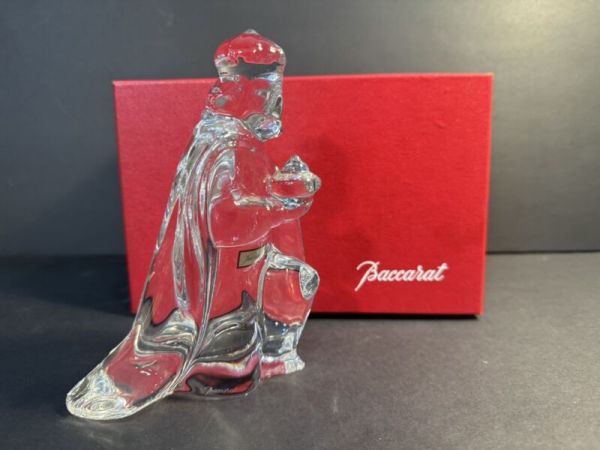
Sold on eBay October 15th, 2024
Scarce Baccarat Balthazar Kneeling King Wise Man Nativity Scene MINT in Box!
This exquisite and very rare Baccarat sculpture is a true gem for collectors. The intricate details of the wise man's clothing and the clear crystal material make it a stunning piece that will surely catch the eye. Measuring at 6 inches in height, this original and signed sculpture is a must-have for any fan of the Nativity scene. In MINT condition. The item comes in its original box and was made in France, adding to its authenticity and value. Whether you're a sculpture collector or simply looking for a unique piece to add to your home decor, this piece is sure to impress. Free shipping in the U.S. (Condition: Pre-Owned)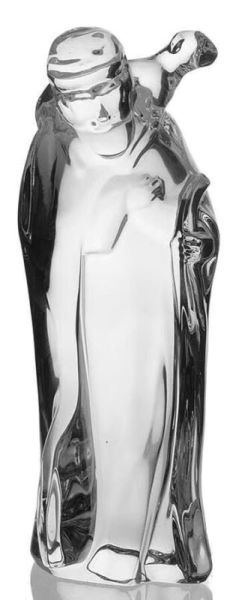
Sold on eBay October 12th, 2024
BACCARAT CRYSTAL SHEPHERD MAN with LAMB old NATIVITY SCENE Figurine MINT IN BOX
BACCARAT CRYSTAL SHEPHERD WITH LAMB SHOULDER NATIVITY FIGURINE OLD VERSION.This is the Shepherd Man not to be confused with the little Shepherd Boy.Height: 7 3/8 inExcellent condition free of chips or cracks. marked with circular Baccarat stamp in the glass, on the bottom. marked Baccarat on the side of the glass, in script.This item has part of the original price tag on the bottom. Has been wrapped and stored, not displayed.Comes with a Red Baccarat Gift Box
Sold on eBay Aug 15, 2021
Baccarat Crystal Encounters Man & Women Signed Robert Rigot 5â? Tall
Baccarat Crystal Encounters Man & Women Signed Robert Rigot. Condition is "Used". Shipped with USPS Priority Mail. It has scratches F-1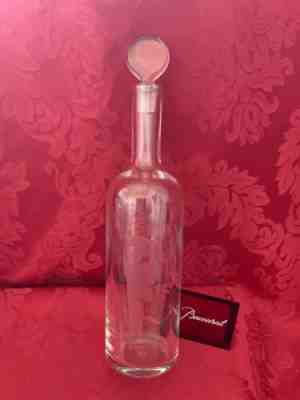
Sold on eBay Jul 13, 2022
NEW FLAWLESS Crystal BACCARAT PERFECTION Smoking Man & Woman DECANTER & STOPPER
�� Baccarat Emblem Etched On Bottom Of Decanter. ½ ½Baccarat Emblem Etched On Bottom Of Stopper. �� Decanter ~ Tall ~ Slender Neck ~ Seamless Bordeaux Style Body Silhouette. �� Stopper ~ Round Globe ~ Adding Linear Emphasis.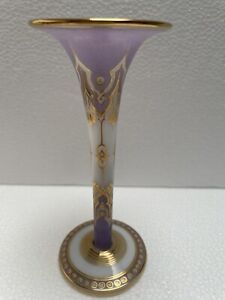
Sold on eBay July 28th, 2023
MAGNIFICENT BACCARAT OPALINE SOLIFLORE VASE #363
MAGNIFICENT BACCARAT OPALINE SOLIFLORE VASE Mint condition Antique ornate Baccarat vase with an Art Nouveau design. Beautifully hand painted with all the flare of the art nouveau period. Its main background is a pale lavender the detail and gracefulness of the painting and all embellished with gold details. This piece demonstrates the excellent workmanship only associated with the top French crystalleries. This would make a great gift or something to add to a collectors display or in a display cabinet Dimensions: DIAMETER: 2 1/2 INCHES / HEIGHT: 6 INCHESBACCARATThis history of Baccarat spans two hundred years, numerous wars, and unsurpassed advancement in crystal design and manufacturing. Baccarat is a small French town of 600 situated 250 miles east of Paris. In 1764, slightly prior to the French Revolution, Monseigneur de Montmorency Laval the Bishop of Metz, petitioned King Louis XV to allow him to open a glassworks factory on the banks of the River Meurthe. The reason for the Bishop’s interest in opening a glassworks factory was that he owned thousands of acres of old growth forests. In order to turn a profit on the deforestation of his land, the Bishop needed to find some industry that would consume lots of firewood. In 1765, the Compagnie des Cristalleries de Baccarat was established. The Bishop employed the influence of the church to locate investor to build the factory. His next move was to find an architect and technician to run the factory. A man named Antoine Renaut was hired to oversee the building and running of the Baccarat factory. Baccarat flourished in the coming decades. By the beginnings of the French Revolution, the company employed a work force of 400 people. It must be noted that Baccarat was opened during the age of reason and enlightenment. The managers at Baccarat decided to employee many of the social concepts concerning individual rights and human dignity that arose from the new social philosophies of the period. A small utopian community was built at the Baccarat factory that housed over 70 families. Although Baccarat was ahead of their time in concerning themselves with the welfare of their employees, their motives were not entirely altruistic. The firing of glass at the time was still an imperfect art and was influenced by many factors, including the weather. It was important to have Baccarat’s master craftsmen very close to the factory in order to produce the best possible product. During this time, the company mainly produced bottles, mirrors, and windows panes. Baccarat met a formidable challenge at the beginning of the French Revolution. Economic instability was common in France at this time, however, the situation worsened as the country collapsed into civil war. France’s economic situation continued to worsen with the Napoleonic wars that swept across Europe during the early 19th century. By 1816, inflation caused the company to operate at a loss and the work force was reduced to less than 70 people. During that same year, the factory was sold to a Belgian expert in the production of glass. The purchaser, Monsieur d’Artigues bought the company with 2,845 ounces of solid gold. Monsieur d’Artigues was an ambitious man who set his sites on making Baccarat one of the most prestigious names in glass in Europe and the world. In 1838, a manager at Baccarat discovered a way to produce full-lead crystal that could be colored. The formula was one of the company’s most closely guarded trade secrets. However, the information was leaked to the Bohemians living in the area who produced similar works to those of Baccarat. There was no competition between Baccarat and the Bohemians however, as the Bohemian interest was purely artistic and they philosophically were not interested in making a profit. The factory continued to grow in prestige throughout the remainder of the 19th century. By the end of the 19th century, Baccarat had earned the reputation of being the “Crystal of Kings.” This title is one that the company bears to this day. Baccarat’s stemware and objects d’art adorned the tables of the late Czar and Czarina of Russia, the Emperor of Japan, the late Sultan of Turkey, the King of Siam, Presidents Theodore Roosevelt and Franklin Delano Roosevelt, the last three kings of France – Louis XVIII, Charles X, and Louis Philippe, all the Presidents of the French Republic, the Late Aga Kahn, Pope Benedict XV, President of the Republic of Chile, the former king of Portugal, the late king of Spain, the King of Greece, Emperor Haile Selassie of Ethiopia, the late Wilhelm II of Germany, the US State Departments’ many legations and European Embassies, all of the Maharajahs of India, and King Ibn of Saudia Arabia. For display pieces for the famous Paris Exhibition of 1889 (the same exhibition during which the Eiffel Tower was built), Baccarat created two of its most popular pattern Harcourt and Gascogne. Today, Harcourt is one of the Pope’s stemware patterns at the Vatican. (Condition: Pre-Owned)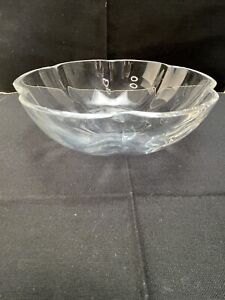
Sold on eBay August 25th, 2023
BACCARAT LARGE "CORAIL" SERVING BOWLS. CONTEMPORARY CRYSTAL #425
BACCARAT LARGE "CORAIL" SERVING BOWLS. CONTEMPORARY CRYSTALGREAT SIZE AND MULTI PURPOSE. CAN BE USED TO SERVE PART OF YOUR DINNER IN, CAN BE FOR A HOMEMADE DESSERT THIS SIZE IS IDEAL FOR 4-6 THERE ARE 3 BOWLS HOWEVER YOU ARE ONLY BE CHARGED FOR 2. ONE OF THE BOWLS HAS MANY SHELF SCRATCHES SO IT IS BEING OFFERED AS FREE. THERE ARE 3 LISTINGS FOR THESE BOWLS AND WOULD WORK VERY GOOD FOR SOMEONE WHO DOES ALOT OF ENTERTAINING WHEN THESE WERE OFFERED IN 1960 THE PRICE PRICE WAS 300 DOLLARS. THINK OF WHAT YOU MIGHT USE THESE FOR. HEIGHT: 3" WIDTH: 7 3/4" BACCARATThis history of Baccarat spans two hundred years, numerous wars, and unsurpassed advancement in crystal design and manufacturing. Baccarat is a small French town of 600 situated 250 miles east of Paris. In 1764, slightly prior to the French Revolution, Monseigneur de Montmorency Laval the Bishop of Metz, petitioned King Louis XV to allow him to open a glassworks factory on the banks of the River Meurthe. The reason for the Bishop’s interest in opening a glassworks factory was that he owned thousands of acres of old growth forests. In order to turn a profit on the deforestation of his land, the Bishop needed to find some industry that would consume lots of firewood. In 1765, the Compagnie des Cristalleries de Baccarat was established. The Bishop employed the influence of the church to locate an investor to build the factory. His next move was to find an architect and technician to run the factory. A man named Antoine Renaut was hired to oversee the building and running of the Baccarat factory. Baccarat flourished in the coming decades. By the beginnings of the French Revolution, the company employed a workforce of 400 people. It must be noted that Baccarat was opened during the age of reason and enlightenment. The managers at Baccarat decided to employee many of the social concepts concerning individual rights and human dignity that arose from the new social philosophies of the period. A small utopian community was built at the Baccarat factory that housed over 70 families. Although Baccarat was ahead of their time in concerning themselves with the welfare of their employees, their motives were not entirely altruistic. The firing of glass at the time was still an imperfect art and was influenced by many factors, including the weather. It was important to have Baccarat’s master craftsmen very close to the factory in order to produce the best possible product. During this time, the company mainly produced bottles, mirrors, and windows panes. Baccarat met a formidable challenge at the beginning of the French Revolution. Economic instability was common in France at this time, however, the situation worsened as the country collapsed into civil war. France’s economic situation continued to worsen with the Napoleonic wars that swept across Europe during the early 19th century. By 1816, inflation caused the company to operate at a loss and the workforce was reduced to less than 70 people. During that same year, the factory was sold to a Belgian expert in the production of glass. The purchaser, Monsieur d’Artigues bought the company with 2,845 ounces of solid gold. Monsieur d’Artigues was an ambitious man who set his sites on making Baccarat one of the most prestigious names in glass in Europe and the world. In 1838, a manager at Baccarat discovered a way to produce full-lead crystal that could be colored. The formula was one of the company’s most closely guarded trade secrets. However, the information was leaked to the Bohemians living in the area who produced similar works to those of Baccarat. There was no competition between Baccarat and the Bohemians, however, as the Bohemian interest was purely artistic and they philosophically were not interested in making a profit. The factory continued to grow in prestige throughout the remainder of the 19th century. By the end of the 19th century, Baccarat had earned the reputation of being the “Crystal of Kings.” This title is one that the company bears to this day. Baccarat’s stemware and objects d’art adorned the tables of the late Czar and Czarina of Russia, the Emperor of Japan, the late Sultan of Turkey, the King of Siam, Presidents Theodore Roosevelt and Franklin Delano Roosevelt, the last three kings of France – Louis XVIII, Charles X, and Louis Philippe, all the Presidents of the French Republic, the Late Aga Kahn, Pope Benedict XV, President of the Republic of Chile, the former king of Portugal, the late king of Spain, the King of Greece, Emperor Haile Selassie of Ethiopia, the late Wilhelm II of Germany, the US State Departments’ many legations and European Embassies, all of the Maharajahs of India, and King Ibn of Saudia Arabia. For display pieces for the famous Paris Exhibition of 1889 (the same exhibition during which the Eiffel Tower was built), Baccarat created two of its most popular pattern Harcourt and Gascogne. Today, Harcourt is one of the Pope’s stemware patterns at the Vatican. (Condition: Pre-Owned)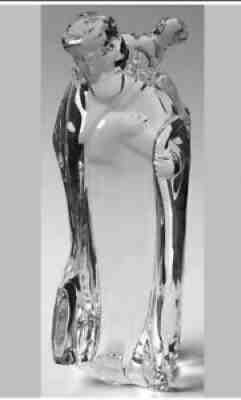
Sold on eBay Dec 14, 2021
old BACCARAT SHEPHERD MAN W/SHEEP DOUBLE SIGNED NATIVITY SCENE RETIRED FIG MIB
Baccarat Shepherd Man with Sheep on his shoulders from the old retired Nativity Scene, this piece is double signed on the base with the Baccarat and etched Baccarat script mark on the side. BACCARAT SHEPHERD MAN W/SHEEP.
Sold on eBay May 25th, 2024
Baccarat Serpentin Vase Crystal Large 25.5CM 10” W Original Box HEAVY not cloudy
Baccarat Serpentin Vase Crystal Large 25.5CM 10” W Original Box HEAVY. No chips and the only visible scratches or scuffs I see are on the bottom. This has been used and is absolutely gorgeous. The most beautiful centerpiece or floral arrangement can display in this at the entryway or wherever you please. Retail $1200. Ouch! 10” height and about 6 1/2” width. Please ask for free shipping on any full price offer, I am happy to do that for you. Note These photos look terrible and the crystal is really clear to the eye. It's not cloudy or damaged like the photos appear. It's gorgeous. It's just hard to photo crystal and I'm an old man so I have no photography talent. (Condition: Pre-Owned)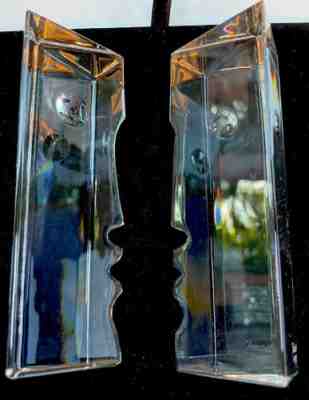
Sold on eBay Jun 19, 2022
ROBERT RIGOT BACCARAT SET Encounter Man & Woman Crystal Figurine Sculptures
ROBERT RIGOT BACCARAT SET Encounter Man & Woman Crystal Figurine Sculpture. In Excellent Preowned Condition with no chips, cracks or repairs.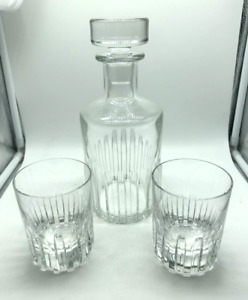
Sold on eBay October 20th, 2023
BACCARAT Vintage France Glass Rotary Crystal Decanter, Stropper & 2 Tumblers
eBay Elegant Baccarat France Crystal Rotary Decanter, Stopper & 2 Tumblers. This rare beauty stands 10" in height, and is4" in width. This decanter has very modern carved lines vertically which adds beauty and interest to the beautiful design.There are minimal scratches on the bottom of this decanter. I will show in pictures, believed to be from shelf life. Other than that, it's perfection. The brand is stamped on the bottom of decanter. Also, there are 2 beautiful Baccarat Crystal Rotary Tumblers. Rare, and vintage with minimal signs of use. 4 1/4" in height, and 3 1/4" wide. What a beautiful set from Baccarat to have and enjoy at any bar or man cave. Alsoyou will find the branded stamp on the bottom of tumbler.And last, I would like to take a moment and thank you for taking the time for stopping by. I know that you have severaloptions, and I am glad I am one. Please remember that some of my store items are secondhand. I try my best to listany and all flaws. Please read all measurements carefully and look at all pictures posted. I will gladly answer any questionsyou may have. Your business is greatly appreciated, and I want all shoppers to be happy. Please feel free to contact meif you are unhappy with your purchase before leaving negative feedback so we can work something out.All items ship same or next business day. Thanks again, and happy shopping!! (Condition: Pre-Owned)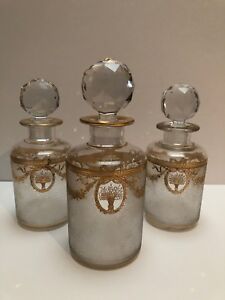
Sold on eBay January 15th, 2024
BACCARAT FROSTED PERFUME BOTTLES WITH ELABORATE GOLD GARLANDS AND FLOWERS
eBay BACCARAT MAGNIFICENT FROSTED PERFUME BOTTLES WITH GOLD GARLANDS AND FLOWERS SET OF 3Magnificent and in great condition. Antique large size perfume bottles with frosted backgrounds and gold garlands urns with flower bows and gold trim. These pieces execute many of the fine work Baccarat was famous for. The stoppers are very ornate cut crystal balls with a gold star on top. The pieces have miniscule gold loss. These pieces date from the 1900-1920's This is a beautiful and magnificent collection demonstrating the masterful work of Baccarat. Makes a great addition to a collectors collection or as a table piece or a focal piece in a vitrine. Dimensions: WIDTH : 3" INCH / HEIGHT: 7 1/2" INCH (2 bottles) WIDTH : 3 1/4" INCH / HEIGHT: 8 1/4" INCH (1 bottle) BACCARATThis history of Baccarat spans two hundred years, numerous wars, and unsurpassed advancement in crystal design and manufacturing. Baccarat is a small French town of 600 situated 250 miles east of Paris. In 1764, slightly prior to the French Revolution, Monseigneur de Montmorency Laval the Bishop of Metz, petitioned King Louis XV to allow him to open a glassworks factory on the banks of the River Meurthe. The reason for the Bishop’s interest in opening a glassworks factory was that he owned thousands of acres of old growth forests. In order to turn a profit on the deforestation of his land, the Bishop needed to find some industry that would consume lots of firewood. In 1765, the Compagnie des Cristalleries de Baccarat was established. The Bishop employed the influence of the church to locate an investor to build the factory. His next move was to find an architect and technician to run the factory. A man named Antoine Renaut was hired to oversee the building and running of the Baccarat factory. Baccarat flourished in the coming decades. By the beginnings of the French Revolution, the company employed a workforce of 400 people. It must be noted that Baccarat was opened during the age of reason and enlightenment. The managers at Baccarat decided to employee many of the social concepts concerning individual rights and human dignity that arose from the new social philosophies of the period. A small utopian community was built at the Baccarat factory that housed over 70 families. Although Baccarat was ahead of their time in concerning themselves with the welfare of their employees, their motives were not entirely altruistic. The firing of glass at the time was still an imperfect art and was influenced by many factors, including the weather. It was important to have Baccarat’s master craftsmen very close to the factory in order to produce the best possible product. During this time, the company mainly produced bottles, mirrors, and windows panes. Baccarat met a formidable challenge at the beginning of the French Revolution. Economic instability was common in France at this time, however, the situation worsened as the country collapsed into civil war. France’s economic situation continued to worsen with the Napoleonic wars that swept across Europe during the early 19th century. By 1816, inflation caused the company to operate at a loss and the workforce was reduced to less than 70 people. During that same year, the factory was sold to a Belgian expert in the production of glass. The purchaser, Monsieur d’Artigues bought the company with 2,845 ounces of solid gold. Monsieur d’Artigues was an ambitious man who set his sites on making Baccarat one of the most prestigious names in glass in Europe and the world. In 1838, a manager at Baccarat discovered a way to produce a full-lead crystal that could be colored. The formula was one of the company’s most closely guarded trade secrets. However, the information was leaked to the Bohemians living in the area who produced similar works to those of Baccarat. There was no competition between Baccarat and the Bohemians, however, as the Bohemian interest was purely artistic and they philosophically were not interested in making a profit. The factory continued to grow in prestige throughout the remainder of the 19th century. By the end of the 19th century, Baccarat had earned the reputation of being the “Crystal of Kings.” This title is one that the company bears to this day. Baccarat’s stemware and objects d’art adorned the tables of the late Czar and Czarina of Russia, the Emperor of Japan, the late Sultan of Turkey, the King of Siam, Presidents Theodore Roosevelt and Franklin Delano Roosevelt, the last three kings of France – Louis XVIII, Charles X, and Louis Philippe, all the Presidents of the French Republic, the Late Aga Kahn, Pope Benedict XV, President of the Republic of Chile, the former king of Portugal, the late king of Spain, the King of Greece, Emperor Haile Selassie of Ethiopia, the late Wilhelm II of Germany, the US State Departments’ many legations and European Embassies, all of the Maharajahs of India, and King Ibn of Saudia Arabia. For display pieces for the famous Paris Exhibition of 1889 (the same exhibition during which the Eiffel Tower was built), Baccarat created two of its most popular pattern Harcourt and Gascogne. Today, Harcourt is one of the Pope’s stemware patterns at the Vatican.
Sold on eBay May 21st, 2024